

What is Fluorine Lined Control Valve
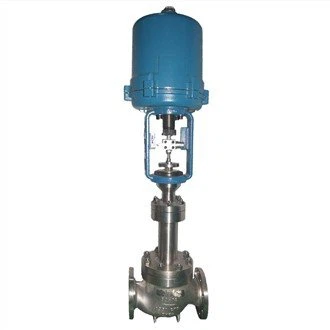
The fluorine lined control valve utilises a full ptfe lined body and trim structure to effectively combat the corrosion caused by aggressive media. Through serrated machining of the metal body cavity, the lining materials seamlessly mesh with the metal, enhancing the longevity and efficacy of the lining. The stem seal, employing a compound seal of bellows seal and V type PTFE packing, ensures zero leakage risk from the stem to the external environment. Specifically tailored for extremely corrosive media in low-pressure and ambient temperature conditions, the unbalanced full lined control valve stands as the optimal choice.
Strong corrosion resistance
The lining material used in the nitrogen lined control valve is a fluoroplastic lining layer. This material has relatively strong corrosion resistance and is relatively strong for the strong corrosive chemical materials. However, the chemical stability of this material is relatively strong. The durability is relatively high, and it is basically not affected by chemical materials, so if it is used properly and maintained regularly, its service life is relatively long.
High security
The ball and the valve stem of this type of valve are integrated, so the pressure change is very large, and the internal pressure-bearing parts are less affected, which can completely guarantee the safety during use.
High convenience
The structure of the fluorine-lined control valve is a full-pass floating ball valve structure. This structure is more effective for pressure dispersion, and the connection between the structures is relatively close, and the dredging is relatively strong. Therefore, the system can be used for management and later maintenance. It is very convenient to overhaul it, and there are relatively few troubles encountered in the whole maintenance process, and it does not require special professional personnel to operate.
Superior tightness and sealing
The PTFE lining forms a tight and reliable seal, ensuring bubble-tight shut-off and preventing any leakage. This makes fluorine lined valves ideal for applications where leak-free operation is critical, such as in hazardous or environmentally sensitive areas.


Why Choose Us
Our Product
Pneumatic/ Electric Single Seat Control Valve, Pneumatic/ Electric Sleeve Control Valve, Pneumatic/Electric V-shaped Control Valve, Pneumatic/ Electric Shutoff Butterfly Valve, Pneumatic/ Electric Control Butterfly Valve, Pneumatic/ Electric Shutoff Ball Valve, Pneumatic/ Electric Control Ball Valve, Self-operated Regulating valve, desuperheating and pressure reducing device, pneumatic/ electric eccentric rotary valve.
Product Application
Valves are widely used in petroleum, petrochemical, electric power, chemical industry, coal chemical industry, coal-to-liquids, metallurgy, mining, nuclear power energy, papermaking, pharmaceutical manufacturing and many other industries ISO9001 quality management system certification, ISO14001 environmental management system certification, ISO45001 occupational health and safety management system certification, special equipment production license, SIL valve certification, a variety of innovative patents.
Production Market
The company focuses on the Chinese market, has in-depth and close cooperation with many large groups in China, is responsible for many large-scale projects every year, and achieves increasing performance results. At the same time, the company has strategically deployed markets in various countries, and has cooperated with multinational companies in Russia, India, Germany and other countries on projects, and its overseas market performance has increased by 100% in 2021.
Our Service
Pre-sales professional engineers are responsible for calculation and selection and answering customers' doubts, giving professional answers and professional opinions on valve working conditions, and 1-to-1 professional personnel to introduce and guide products, allowing customers to choose There will be no professional doubts.
Fluorine Lined Control Valve Lining Material Applicable Table
|
Polyperfluoroethylene FEP (F46) |
Applicable medium: Any organic solvent or reagent, dilute or concentrated inorganic acid, alkali, ketone, aromatic hydrocarbon, chlorinated hydrocarbon, etc. Operating temperature: -85~150℃ Features: The mechanical, electrical properties and chemical stability are basically the same as F4, but the outstanding advantage is high dynamic toughness, excellent weather resistance and radiation resistance. |
|
Polytrifluoroethylene PCTEF(F3) |
Applicable medium: Various organic solvents, inorganic corrosive liquids (oxidizing acids) Operating temperature: -195~120℃ Features: heat resistance, electrical properties and chemical stability second only to F4, mechanical strength, creep properties, hardness Better than F4 |
|
Polypropylene RPP |
Applicable medium: Aqueous solutions of inorganic salts, dilute or concentrated solutions of inorganic acids and alkalis. Operating temperature: -14~80℃ Features: one of the lightest plastics, its tensile and compressive strength at yield, hardness is better than that of low-pressure polyethylene, outstanding rigidity, good heat resistance, easy to form, and cheap. After modification, it has dynamic impact, fluidity and bending elasticity. |
|
Rigid PVC |
Applicable medium: Water resistant, concentrated alkali, non-oxidizing acid, chain hydrocarbon, oil and ozone, etc. Operating temperature: 0-55℃ Features: high mechanical strength, excellent chemical stability and dielectric properties, good oil resistance and aging resistance, easy welding and bonding, and low price. |
|
Polytetrachloroethylene PTFE (F4) |
Use medium: Strong acid, strong base, strong oxidant, etc. Operating temperature: -200~180℃ Features: Excellent chemical stability, high heat resistance, cold resistance, low friction coefficient, it is an excellent self-lubricating material. But the mechanical properties are low, the fluidity is poor, and the thermal expansion is large. |
|
Polyvinylidene chloride PVDF (F2) |
Use medium: Resistant to most chemicals and solvents, operating temperature: -70~100°C Features: tensile strength and compressive strength are better than F4, bending resistance, weather resistance, and radiation resistance. Light resistance and aging, etc., the biggest feature is good toughness and easy forming. |
|
Polyolefin PO |
Applicable medium: Various concentrations of acid-base salts and certain organic solvents. Operating temperature: -58~80℃ Features: It is the most ideal anti-corrosion material in the world at present, and it has been widely used in the lining of large-scale equipment and pipe fittings of rotational molding. |
How to Choose Fluorine Lined Control Valve
In industries such as chemical, pharmaceutical, and petroleum, fluorine-lined control valves play a crucial role as key equipment in safeguarding production systems and regulating fluid flow. However, when facing corrosive environments, choosing the appropriate fluorine-lined valve and using it correctly are vital steps in ensuring process safety and productivity.
Temperature Control
The temperature resistance range of fluorine-lined control valves is a critical factor determining their functionality. When selecting these valves, it's essential to choose the lining material based on the temperature of the medium, ensuring that the medium temperature remains below approximately 30% of the material's maximum temperature resistance. This helps prevent deformation of the lining material due to excessive temperatures, which could otherwise lead to decreased valve performance or leakage risks.
Pressure Management
Fluorine-lined control valves are typically unsuitable for high-pressure or high-pressure differential conditions. Using them in such environments may result in the lining layer being pulled out or delaminated, thereby affecting the valve's normal operation. For applications with high pressure or pressure differentials, alternative valve types or additional reinforcement measures are necessary to ensure safe valve operation.
Medium Requirements
The medium used with fluorine-lined control valves should not contain hard particles, crystals, or impurities. These impurities accelerate valve wear and reduce its service life. If the medium contains hard particles or crystals, considering corrosion-resistant materials such as Hastelloy, nickel-based alloys, etc., can ensure the long-term stability of the valve's operation.
Valve Size Selection
Fluorine-lined control valves typically feature a fluorine-lined bellows seal structure, offering excellent corrosion resistance and leak-free performance. When selecting valve sizes, it's crucial to calculate based on process parameters and ensure that the normal opening degree falls within the range of 30% to 85%. This prevents the valve from operating at small opening degrees for extended periods, thus preserving its regulating performance and stability.
Maintenance and Care
Regular inspection and maintenance of fluorine-lined control valves are essential to ensuring their long-term stable operation. Periodically cleaning the valve internals, inspecting lining material wear, and promptly replacing severely worn components can extend the valve's service life.
Types of Fluorine Lined Control Valve
Fluorine lined ball valve
The ball valve with fluoroplastic lining layer has extremely high chemical stability and is suitable for any strong corrosive chemical medium. The structure is a full-pass floating ball valve structure. The element leakage closes in the entire pressure range, which is convenient for the pipeline system to pass Ball sweep line and pipeline maintenance.
Fluorine-lined butterfly valve
Used in occasions requiring reliable sealing and good adjustment characteristics. The valve body of the fluorine-lined butterfly valve adopts a split type, and the sealing of the current end of the valve shaft is controlled by adding fluorine rubber to the rotating base surface between the butterfly plate and the valve seat, so as to achieve compact structure, beautiful appearance, reasonable process and reliable performance. The fluorine-lined butterfly valve ensures that the valve shaft does not contact the fluid medium in the cavity. It is very convenient to replace the valve shaft. The fluorine-lined butterfly valve can be completed without removing the pipeline.
Fluorine lined gate valve
One of the most common open-close valves, which use wedge-shaped gates sealed on both sides to connect or cut off the medium in the pipeline. The wedge gate valve does not allow a small amount of opening to be used as a throttling device in the pipeline to avoid high-speed flow The medium erodes and accelerates the damage of the sealing surface.
Fluorine-lined plug valve
The structure is compact and reasonable, the internal cavity space of the valve is minimal, and the medium retention is reduced. In addition, the special molding process makes the sealing surface dense, and the combination of herringbone ring PTFE packing enables the valve to achieve zero leakage; this series is for various It is designed for automatic opening and closing control of the pipeline of strong corrosive medium.
Fluorine-lined globe valve
The valve can be unblocked or blocked by lifting the valve flap. The valve flap and the inner side of the valve body are all made of fluoroplastic lining. It has the advantages of light switch, small size, reliable sealing, simple structure, convenient maintenance and wide range of use.
Fluorine-lined check valve
The fluorine-lined check valve only allows the medium to flow in one direction and prevents the flow in the opposite direction. Usually this fluorine-lined check valve works automatically. Under the pressure of one direction, the valve flap opens and the liquid flows in the opposite direction. There are liquid pressure and the weight of the valve flap, and the closing valve flap acts on the valve weight to cut off the flow.
Medium temperature
For valves lined with fluorine plastic, the fluoroplastic used is F46 (FEP), and the medium temperature used cannot exceed 150°C (the medium temperature can reach 150°C in a short time, and the long-term use temperature should be controlled within 120°C). Otherwise, the Valve's F46 lining of each component is easy to soften and deform, causing the valve to not close and causing large leakage.
If the temperature of the medium used is below 180°C in the short term and below 150°C in the long term, you can choose another fluoroplastic - PFA, but the one lined with PFA fluoroplastic is more expensive than the one lined with F46.
No negative pressure
Fluorine-plastic lined valves should avoid using pipelines with negative pressure. If there is negative pressure, it will easily cause the fluorine-plastic lined layer in the inner cavity of the valve to be sucked out (bulged out) and shelled out, causing valve opening and closing failures.
Pressure, differential pressure control range
Pressure and pressure difference should be controlled within the allowable range. Especially the bellows-sealed fluoroplastic-lined regulating valves and stop valves. Because the bellows are made of PTFE material, the pressure and pressure difference are large, which can easily cause the bellows to rupture and cause the rubber-lined valve to break. The bellows-sealed fluorine-plastic-lined Regulating Valve can be changed to a PTFE packing seal if the operating pressure and pressure difference are large.
Suitable Medium
The medium conditions used in fluoroplastic-lined valves should not contain hard particles, crystals, impurities, etc., to prevent the valve from wearing out the fluorine-plastic lining layer or PTFE bellows of the valve core and valve seat during the opening and closing. If the medium contains hard particles, crystals, and impurities, the valve core and valve seat can be replaced with Hastelloy rubber-lined valves.
Valve Diameter
The diameter of the fluorine-plastic lined regulating valve should be correctly selected according to the required flow rate (Cv value). When selecting, the diameter of the valve and the opening degree of the valve should be calculated based on the required flow rate (Cv value) and other technical parameters. If the diameter of the valve is selected too large, it will inevitably cause the valve to have a small opening degree for a long time. When operating under normal conditions, coupled with the pressure of the medium, it is easy for the valve core and rod to be impacted by the medium, causing the valve to vibrate. The valve core rod is under the impact of the medium for a long time, and may even cause the valve stem to break in rubber-lined valves.
How to Extend the Service Life of Fluorine Lined Control Valve
Fluorine-lined control valves are also known as anti-corrosion valves. They are often exposed to harsh working conditions. They are not toxic and harmful chemicals, or are very corrosive. Various acids and alkalis or organic solvents. Improper use will cause major economic losses and serious problems. as a result of. Correct use and maintenance of the valve can prolong the service life of the fluorine-lined control valve.
Before use, carefully read the fluorine-lined control valve instruction manual.
Use according to the pressure, temperature, and use medium specified on the nameplate or in the manual.
When using, prevent the fluorine-lined control valve from generating excessive pipeline stress due to temperature changes, minimize temperature changes, and add U-shaped expansion joints before and after the valve.
It is forbidden to use levers to open and close the fluorine-lined control valve. Pay attention to the opening and closing indication position and limit device of the fluorine-lined control valve. After opening and closing are in place, do not forcefully close it to avoid premature damage to the fluorine plastic sealing surface.
For some media that are unstable and easy to decompose (such as the decomposition of some media will cause volume expansion and abnormal pressure increase in working conditions), which will cause valve damage or leakage, measures should be taken to eliminate or limit the factors that cause unstable media to decompose . When selecting the valve type, the fluorine-lined control valve with automatic pressure relief device should be selected in consideration of the changes in working conditions that may be caused by the unstable and easy decomposition of the medium.
For fluorine-lined control valves on pipelines with toxic, flammable, explosive, and highly corrosive media, it is strictly forbidden to replace the packing under pressure. Although the fluorine-lined control valve is designed to have an upper sealing function, it is not recommended to replace the packing under pressure.
For pipelines with spontaneous flammable media, measures must be taken to ensure that the ambient temperature and working condition temperature do not exceed the spontaneous ignition point of the media to prevent the danger caused by sunlight or external fire.
FAQ
We're professional fluorine lined control valve manufacturers in China, specialized in providing high quality customized products. We warmly welcome you to buy durable fluorine lined control valve at competitive price from our factory. For pricelist and quotation, contact us now.
fluorine lined valve for compression feature testing, fluorine lined valve for pumping feature testing, fluorine lined valve for expansion feature testing