

What is Ball Control Valve
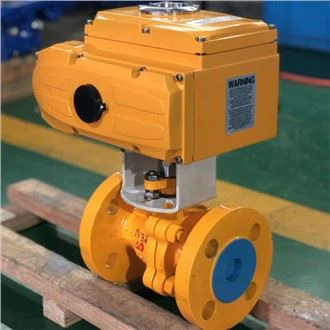
Ball control valves are widely used in many industries due to their tight shut-off ability, low maintenance requirements and ability to precisely regulate flow rates across a wide range. Their wide temperature and pressure adaptability makes them suitable for various applications including oil & gas, water treatment, chemical processing and HVAC systems.These types of Valve can be manually controlled using a hand wheel or lever or automated by means of pneumatic, electric or hydraulic actuators which allow remote operation and automation. Fluid type, temperature, pressure and specific application requirements are some factors that determine design specifications and material composition for ball control valves for example.
Rapid operation
Ball control valves enable quick opening and closing by a simple quarter turn of the handle or actuator; hence making them respond quickly during an emergency or normal service.
Effective sealing
When control completely closed, ball control valves create a tight seal against fluid flow that helps to reduce leakage and prevent backflow, which is important for safety and process integrity.
Very low pressure drop
Due to their smooth flow path with few barriers, ball control valve experience little pressure drop across the valve even when it’s fully open; this assists in keeping flow rates efficient while saving energy.
Versatility
Designed for wide range of fluids including liquids, gases and slurries that can withstand different pressures and temperatures. They can be made from various materials to endure corrosive environments or high-temperature conditions.
Flow directionality
Ball control valves are excellent at managing flow in two directions without compromising on performance or seal integrity.
Ease of maintenance
Being quite simple in nature with just a few moving parts means ball control valves are easy to maintain and repair hence your routine maintenance activities such as lubrication or replacing seals can be carried out swiftly with low downtime required.
Long service life
By properly installing them and taking care if their maintenance, ball control valves offer uninterrupted operation over long periods. Robust construction combined with use of tough materials prolongs their life span while cutting down on replacement costs.


Why Choose Us
Our Product
Pneumatic/ Electric Single Seat Control Valve, Pneumatic/ Electric Sleeve Control Valve, Pneumatic/Electric V-shaped Control Valve, Pneumatic/ Electric Shutoff Butterfly Valve, Pneumatic/ Electric Control Butterfly Valve, Pneumatic/ Electric Shutoff Ball Valve, Pneumatic/ Electric Control Ball Valve, Self-operated Regulating valve, desuperheating and pressure reducing device, pneumatic/ electric eccentric rotary valve.
Product Application
Valves are widely used in petroleum, petrochemical, electric power, chemical industry, coal chemical industry, coal-to-liquids, metallurgy, mining, nuclear power energy, papermaking, pharmaceutical manufacturing and many other industries ISO9001 quality management system certification, ISO14001 environmental management system certification, ISO45001 occupational health and safety management system certification, special equipment production license, SIL valve certification, a variety of innovative patents.
Production Market
The company focuses on the Chinese market, has in-depth and close cooperation with many large groups in China, is responsible for many large-scale projects every year, and achieves increasing performance results. At the same time, the company has strategically deployed markets in various countries, and has cooperated with multinational companies in Russia, India, Germany and other countries on projects, and its overseas market performance has increased by 100% in 2021.
Our Service
Pre-sales professional engineers are responsible for calculation and selection and answering customers' doubts, giving professional answers and professional opinions on valve working conditions, and 1-to-1 professional personnel to introduce and guide products, allowing customers to choose There will be no professional doubts.
Parts of a Ball Control Valve
Valve housing
All internal components of a ball control valve are contained inside the valve housing or the body. Its primary function is to provide a secure and sealed enclosure for the ball, ensuring that the flow of fluids through the valve can be precisely controlled. The housing typically features inlet and outlet ports, allowing for the connection of pipes or pipelines. It is made of a hard and rigid metal, thermoplastic, or thermoplastic-lined metal that protects the components of the ball control valve. This robust construction ensures the reliable operation and longevity of ball control valves in various industrial applications.
Ball
The ball is a sphere that has a hole in its center. The hole in its center is called the bore. The bore serves as the flow opening of the fluid when the cross-section of the fluid flow path and the bore is coplanar. Otherwise, the flow is throttled. A ball control valve may have a solid ball or a hollow ball. A solid ball has a constant opening diameter throughout its structure, which helps the fluid to smoothly flow at a constant velocity. A hollow ball, on the other hand, has a hollow internal structure, and the space inside it allows more fluid to pass through the valve. However, the larger space creates turbulence and high velocities. A hollow ball is more lightweight and cheap compared to a solid ball.
Shaft
The shaft connects the ball to the control mechanism that rotates the ball. When the shaft is turned, it either aligns the ball with the valve's flow path to permit the flow of fluids or positions the ball perpendicular to the flow path to block it completely. The shaft has seals such as O-rings and packing rings to seal the shaft and the bonnet to avoid leakage of the fluid. The shaft's design and construction must be robust to withstand the pressure and temperature conditions of the system, ensuring reliable and efficient operation. The shaft may be manually operated by a lever or a handwheel or operated by an electric, pneumatic, or hydraulic actuation.
Bonnet
The bonnet is an extension of the valve housing that contains and protects the shaft and its packing, which is important in high-pressure and high-temperature applications. It may be welded or bolted to the body. It is also made of hard metal and it covers the opening made from connecting the shaft to the external control mechanism.
Seat
Ball control valves have two seats, typically made of soft materials like PTFE or elastomers. These seats form a tight seal around the ball when the valve is in the closed position. They prevent leakage by creating a secure barrier between the ball and the valve body. The upstream seat seals against pressure, while the downstream seat seals against leakage to the atmosphere.
Importance of Choosing the Right Type of Ball Control Valve
Fluid Compatibility
Different kinds of ball valves are designed to handle specific fluids such as water, oil, gas, chemicals, or slurries. It is important to choose the correct valve material to prevent such problems as corrosion, leakage and contamination that can compromise both process and equipment integrity.
Pressure and Temperature Ratings
Ball valves have different pressure and temperature ratings. It is necessary to choose a valve that will withstand conditions under which it operates in order to avoid potential valve failures, leaks or even safety hazards.
Flow Characteristics
Flow characteristics like full bore/reduced bore/V-port design on the ball valve directly affect flow rate and pressure drop across the valve. Selecting the right flow characteristic facilitates effective fluid flow control as well as reduces energy losses.
Size and Connection Type
Ball valves come in various sizes and connection types suitable for different pipe installations. Correct selection of valve size and connection ensures proper installation with existing pipe work.
Operating Mechanism
Ball valves are manual or can be equipped with pneumatic/ electric/hydraulic actuators. The choice of operating mechanism depends on factors such as operational frequency, ease of access and automation requirements aimed at improving control accuracy as well as system dependability.
Environmental Considerations
Issues like exposure to corrosive chemicals, abrasives substances/high temperatures/severe weather conditions should be considered when choosing a product. Going for ball valves made from suitable material construction along with protective coatings enhances their resilience/longevity even in harsh environments.
Regulatory Compliance
Safety requires adherence to industrial standards/codes/regulations while trading legally demands compliance with legal requirements. As a matter of fact it becomes critical that one confirms that the selected ball valve meets relevant standards including certifications applicable on its intended application before purchasing them (Lopez 60).
Types of Ball Control Valve
A one-piece ball valve has a single-piece cast body that houses the internal components of the ball valve. This eliminates the risk of leakage of the fluid from the valve. One-piece ball valves are the cheapest ball valves and always have a reduced bore.
Split Body Ball Valves are valves that are assembled on the sides of their balls. A split body ball valve may be a two-piece or a three-piece ball valve:
Two-piece ball valve
A two-piece ball valve consists of housing divided into two pieces that are fitted together. The main piece contains the ball and a connection to one end, and the other piece holds the internal components together and has a connection to the other end. Two-piece housing is the most common type among ball valves. The two parts can be dismantled for cleaning, maintenance, and inspection but it requires removal of the valve from the pipe.
Three-piece ball valve
A three-piece ball valve consists of the housing for the internal components of the valve which are fitted and held together by bolt connections to its two ends. The ends are threaded or welded to the main pipe.
A top entry ball valve allows access to the internals of the valve by simply removing the bonnet on top of the valve. This allows in-line maintenance activities (i.e., dismantling, cleaning, inspection, and repairing the valve) without removing the ball valve from the main pipe.
The floating ball is the most common ball design in ball valves. The ball is suspended inside the valve and free to move in a lateral direction when the valve is in a closed position. It is sandwiched between two seats that support the valve and hold it in place. The ball is connected to the shaft in a slot on one end while the other end is free. When the valve is in an open position, the shaft connection to the slot at the top of the ball prevents the ball from moving laterally.
In a trunnion ball valve, the ball is supported by an additional shaft at its bottom which is called the trunnion. This holds the ball in its place and limits the movement of the ball to its axis. The ball can only move if the valve shaft rotates. Trunnion ball valves also feature spring-loaded seats. The inlet fluid pressure activates the springs towards the ball held by the trunnion, which creates a tight sealing.
A vented ball valve is constructed and operates in the same way as a standard ball valve, except that the vented ball has small orifices drilled into its side. When the valve is closed, the orifice is directed to the outlet side of the valve. The drilled hole is used to vent trapped gases which causes a build-up of internal pressure inside the valve, to prevent leaking, valve failure, and explosion.
Materials of Construction of Ball Control Valve
Brass is an alloy of copper and zinc that can be distinguished by its dull yellowish to reddish color, depending on the amount of zinc. It is the most common material for ball valves. Brass is a tough, strong, and durable metal that can withstand high temperatures and pressures. The copper in brass alloy has antimicrobial properties that inhibit the growth and reproduction of microbes on its surface. Brass has good chemical, corrosion, and biofouling resistance. It is inert to most acids, alkalis, and bases, except for solutions with high chlorine content.
Stainless steel is a type of steel that contains higher chromium content and some amounts of nickel. The chromium content of stainless steel makes it acquire a superior corrosion resistance. Stainless steel is known for its excellent strength, toughness, and durability. It also retains its strength in high temperatures and pressures.
PVC is a tough, rigid and durable plastic material. Compared to brass and stainless-steel alloys, they generally have lower strength but they are cheaper. They are resistant to corrosion and most acids, bases, and salt solutions. However, they are not resistant to aromatic compounds and hydrocarbons.
PP is a tough, durable, lightweight, and flexible thermoplastic made from propylene monomer. It offers good resistance to most acids and bases, but has selective compatibility with organic substances and solvents. Its chemical resistance decreases with increasing temperatures. The maximum operating temperature of PP is 82℃. PP ball valves are suitable for regulating the flow of fluids with a wide range of viscosity.
Steps for Maintaining a Ball Control Valve
Regular cleanings: It is critical to keep ball control valves clean in order to extend their lifespan. It is advised that they be cleaned at least once a year or more frequently if the surroundings are mostly dust or dirt. Remove any oil, dust, or dirt from the casing with a soft towel. Clear any buildup on the valve stem or other components with a wire brush. Cleaning solutions that are suitable for the valve materials, such as alcohol or water-based cleaners for non-metal parts and compressed air or gas-based cleaners for metal components, should be used.
Valve lubrication: Ball control valve lubrication is critical for preventing abrasion and ensuring the smooth operation of valve parts. Choose a lubricant that is compatible with the valve materials and system media, such as water-insoluble, synthetic, or oil-based lubricants. However, solid or clay-based lubricants must be avoided since they can build inside the valve chamber.
Routine inspections: Examine the valve’s seats, seals, and stem for signs of corrosion, leaks, or damage to check for normal wear and tear. In high-pressure and high-cycle applications, examine more frequently.
Consider the following variables:
Tightness of bolts, nuts, and other hardware. Loose bolts and nuts can cause the valve to shift or fail, damaging equipment.
Corrosion or mineral buildup
Correct operation of ball control valves during opening and closure
Accurate position indication (including static valves)
Adequate area ventilation and air filtration
Replace the worn-out components as needed.
● Regular testing: Regular testing, like pressure testing (filling the valve body with a testing fluid and applying pressure for a specified length to check if it leaks), is essential to ensure the ball valve functions correctly.
● Storage: Keep the ball valve in a cool, dry place away from direct sunlight and extreme temperatures. The ideal temperature for the storage space is between 0℃(32℉) to 49℃(120℉). To avoid damage during travel or storage, keep the valve in its original packaging or a protective container if possible.
FAQ
We're professional ball control valve manufacturers in China, specialized in providing high quality customized products. We warmly welcome you to buy durable ball control valve at competitive price from our factory. For pricelist and quotation, contact us now.
high performance straight stroke control valve, valve for fluid control, telecommunications straight stroke control valve