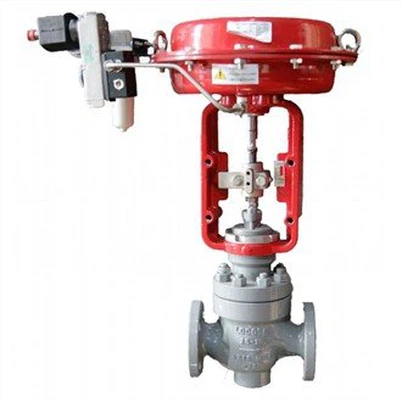
What is the difference between single port and double port control valves?
Leave a message
The terms "single port" and "double port" can refer to different aspects of control valves. Here's a breakdown of the potential differences:
Single Port Control Valve: A single port control valve refers to a control valve that has a single inlet and outlet port. This means that the fluid enters and exits the valve through the same opening. The valve trim, which consists of the plug, seat, and other internal components, controls the flow by modulating the flow area within the single port. Single port control valves are commonly used for applications that require precise flow control or throttling.
Key characteristics of single port control valves include:
Single inlet and outlet: Single port control valves have one inlet and one outlet port, with the fluid passing through a single opening in the valve body.
Precise flow control: Single port control valves offer precise flow modulation by varying the flow area through the single port.
Commonly used for throttling: They are frequently employed for applications that require precise flow regulation, such as process control, HVAC systems, and water treatment.
Double Port Control Valve: A double port control valve refers to a control valve that has two separate inlet and outlet ports. This means that the fluid enters through one port and exits through another, with a separate flow path for each direction. The valve trim, which consists of the plug, seat, and other internal components, controls the flow by modulating the flow area within each port. Double port control valves are commonly used for applications that require bidirectional flow control or where the media may have a tendency to deposit or solidify.
Key characteristics of double port control valves include:
Two separate inlet and outlet ports: Double port control valves have two distinct ports, with separate flow paths for the inlet and outlet of the fluid.
Bidirectional flow control: Double port control valves can control flow in both directions, allowing for bidirectional flow control.
Potential for improved sealing performance: The double port design can provide improved sealing performance, especially in high-pressure applications or applications with media deposition or solidification.
It's worth noting that the terms "single port" and "double port" can be used interchangeably or may have different interpretations depending on the context or industry. The specific design and configuration of control valves can vary, and it's essential to consider the intended application, flow requirements, pressure conditions, and other factors when selecting the appropriate control valve.