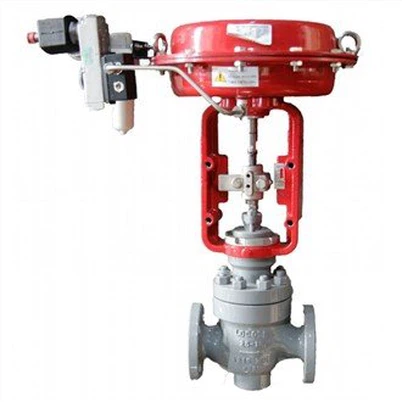
Definition Of Regulating Valve
Leave a message
In the automatic control of modern factories, regulating valves plays a very important role. The production of these factories depends on the correct distribution and control of the migrants. These controls require some final control elements to complete whether energy exchange, decreased pressure, or simple container feed.
The regulating valve plays the role of variable resistance in the pipeline. It changes craft fluid
The turbulence or a pressure drop is provided in the case of layer flow, and the pressure drop is caused by changing valve resistance or "friction". This pressure reduction process is usually called "throwing." For gases, it is close to the temperature and heat heat state, and the deviation depends on the non -ideal level of the gas (the Tomson effect). In the case of liquid, the pressure is consumed by the turbulent or sticky friction. Both situations turn the pressure into thermal energy, causing the temperature to increase slightly.
Common control circuits include three main parts. The first part is sensitive components, and it is usually a transmitter. It is a device that can be used to measure the parameters of the adjustment, such parameters such as pressure, liquid level or temperature. The output of the transmitter is sent to the regulator -regulator, which determines and measures the deviation between the actual value of the given or the actual values of the expected value and the process parameters. valve. The valve changes the flow of the fluid and makes the process parameters reach the expected value.
The regulating valve is a control valve series. The main function is to regulate the pressure, flow, and temperature of the medium. It is the final control element in the process ring.