Why does a single-seat control valve become blocked?
Leave a message
The blocking problem of a single-seat control valve usually leads to reduced flow, failure of the regulation function, and even complete blockage. As the application range of control valves in the field of industrial production becomes wider and wider, blockage of control valves also occurs from time to time. This phenomenon not only weakens the regulating ability of the control valve, but also may cause the loss of control of parameters in the production process, thus having a negative impact on the quality and production efficiency of the product. Therefore, the blockage of the control valve has become one of the bottleneck problems restricting the development of enterprises. What is more worrying is that the blockage of the equipment may cause equipment failure, which brings potential risks to the safety of production.
What impurities or sediments are usually caused by the blockage of the single-seat control valve?
During long-term use, the single-seat control valve may accumulate various impurities and sediments, which may cause it to be blocked. The working environment of the control valve is relatively harsh, so it has some special impurity components. Particles, fibers and scaling are all common types of impurities. Among them, some impurities can cause the valve to get stuck or even damaged. These impurities may enter the inside of the control valve through the fluid medium, or they may be formed inside the control valve. In addition, some foreign matter can also adhere to the valve core and the valve seat surface, causing wear. For example, in the fluid, due to the change of flow rate, solid particles may settle on the valve core or valve seat; fibrous substances may be entangled on the valve stem or sealing parts; and some impurities such as metal particles may adhere to the valve core and the valve cover. The formation of scale may be caused by the precipitation of dissolved substances in the fluid on the inner wall of the valve body. When the valve is opened, a large amount of impurities such as metal chips, iron powder, etc. will be generated. Due to the presence of these impurities and sediments, not only the flow area is reduced, but also the valve core and valve seat may be damaged, causing blockage problems.
Which components in the fluid medium may cause the single-seat control valve to be blocked?
In the fluid medium, certain elements may cause the single-seat control valve to be blocked. For example, if some metal or non-metal liquid media react chemically with the valve, it will cause the control valve to be blocked. For example, when high-viscosity substances flow through the control valve, they can easily adhere to the inner wall and valve core of the valve body, forming a deposit layer that is difficult to remove; corrosive substances may corrode the valve body material, thereby producing impurities such as rust slag; under certain specific environmental conditions, easily crystallized substances may precipitate crystals and cause blockage of the flow channel. Therefore, there are complex flow and heat exchange processes inside the valve, which greatly changes the flow field inside the valve, which increases the possibility of blockage. In addition, changes in the composition of the fluid medium may also affect the risk of blockage. Therefore, when designing and manufacturing valves, the impact of various factors on the risk of blockage must be considered. For example, when the concentration of a certain component in the fluid increases, this may accelerate deposition or change the conditions for crystallization, thereby increasing the possibility of blockage
Will improper operation cause the Single Seat Control Valve to be blocked? If so, what are some common operating errors?
Improper operation is also one of the key factors that cause the Single Seat Control Valve to be blocked. Due to factors such as the structure of the control valve itself and the working environment, some incorrect operations often occur during use. Common operating errors include over-adjustment, frequent starting and stopping, and failure to clean according to regulations. These improper operations will cause the flow direction and speed of the liquid in the control valve to change, which will cause blockage. Excessive adjustment may make the gap between the valve core and the valve seat too small, thereby increasing the possibility of blockage; frequent start-stop operations may cause impurities in the fluid to accumulate more easily inside the control valve; failure to clean according to regulations will cause liquid leakage, affecting the normal operation of the equipment. If cleaning is not performed according to regulations, sediments may accumulate for a long time and eventually cause blockage. In addition, blockage may also occur due to structural defects in the valve itself. Therefore, in order to avoid blockage, correct operation methods and regular cleaning and maintenance are very important.
How does the design or structural factors of single-seat control valves affect their risk of blockage?
The construction or design elements of single-seat control valves have a significant impact on their risk of blockage. For single-seat control valves, the valve core diameter should be minimized to improve its anti-blockage ability while ensuring that the flow characteristic requirements and pressure loss do not exceed the specified range. For example, the design shape of the flow channel, the appropriateness of the selected material, and the reliability of the sealing method will have a direct impact on the anti-blockage characteristics of the control valve. In actual application, various reasons cause uneven flow distribution, which reduces the stability and reliability of the control system. Improper flow channel design may make impurities in the fluid easier to precipitate; inappropriate material selection may increase the risk of corrosion or wear of the valve body; unstable sealing methods may cause fluid leakage or impurities to penetrate into the valve. Single-seat valves have advantages such as simple structure and large flow, but they also have some shortcomings, such as large opening resistance and poor anti-pollution ability. Therefore, in the process of designing and selecting single-seat control valves, we should deeply consider their resistance to blockage and implement necessary optimization strategies.
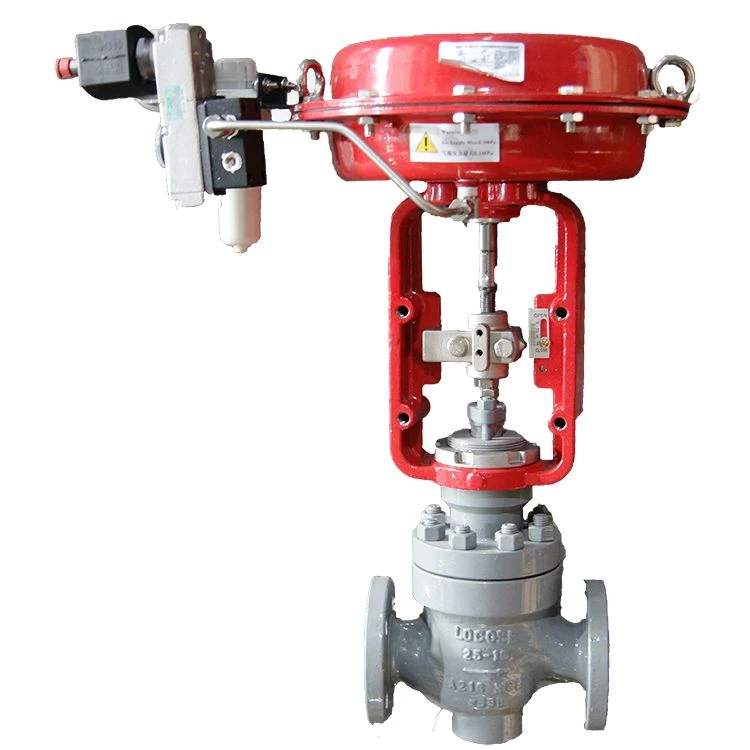
Is a single-seat control valve that has not been maintained or cleaned for a long time more likely to be blocked? How should regular maintenance be performed to prevent blockage?
Single-seat control valves that have not been maintained or cleaned for a long time are more likely to be blocked. Once the control valve is blocked, it is necessary to clean the valve frequently. Over time, impurities and sediments in the fluid will continue to accumulate inside the control valve, which may eventually lead to blockage. In addition, due to the gap between the valve stem and the valve body, the valve core cannot completely seal the liquid medium, which can easily cause the valve to be blocked. Therefore, regular maintenance and cleaning have become the key means to prevent blockage. Regular cleaning of the control valve can reduce the accumulation of impurities and sediments in the valve, reduce its blockage probability, and thus improve the reliability of system operation. More specifically, we need to develop a suitable cleaning plan and clarify the frequency and method of cleaning; when cleaning, it is necessary to ensure that the impurities and sediments inside the valve body are completely removed, and the wear condition of key components such as the valve core and valve seat is checked; damaged or failed parts are replaced regularly to ensure that the valve can work properly. In addition, maintenance records are also necessary to ensure that possible problems can be identified and responded to in a timely manner. For hydraulic systems, regular inspections and maintenance work should be carried out to ensure their normal operation and reduce the occurrence of failures. In addition, when performing maintenance, it is also necessary to pay attention to safety-related matters to ensure the personal safety of staff.
In general, the blockage problem of single-seat control valves is a complex and serious problem, and its causes involve many different aspects. Among many factors, impurities, deposits, operating errors and irregular operating processes may cause single-seat valves to become blocked. In order to effectively avoid the problem of blockage, we must comprehensively consider and implement corresponding measures from many aspects such as impurities, sediments, fluid composition, operating skills, structural design and daily maintenance. Among them, the performance of the valve itself is the most critical factor in the impact of valve blockage. By enhancing regular maintenance and ensuring the accuracy of operation, we have the ability to significantly reduce the possibility of single-seat control valve blockage, thereby ensuring the smooth progress of industrial production and the safe and stable operation of equipment. Therefore, it is of great significance to explore the causes and preventive measures of single-seat control valve blockage. At the same time, we should also pay close attention to the trend of future research or improvement, and continue to look for more efficient means and technologies for preventing blockage. Therefore, in the production process, we must pay enough attention to the problems existing in the valve, and take effective measures to prevent and deal with them. Only in this way can we improve the quality of valve products and increase the competitiveness of enterprises in the market.