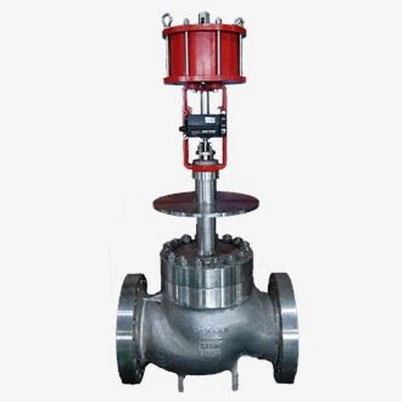
What does stroke mean in control valve?
Leave a message
In the context of control valves, the term "stroke" refers to the movement or travel of the valve's actuator or valve plug/disc from its fully closed position to its fully open position. It represents the distance or displacement traveled by the valve plug/disc as it modulates the flow through the valve.
The stroke of a control valve is a critical parameter that directly affects the flow rate and the degree of control achieved. The stroke length determines the amount of flow area available for fluid passage, and hence, it influences the flow capacity and the valve's ability to regulate the flow.
Here are a few key points regarding the stroke of a control valve:
Control Range: The stroke of a control valve determines the control range or the extent to which the valve can modulate the flow. A longer stroke allows for a broader range of flow control, enabling the valve to achieve finer adjustments in flow rates. Conversely, a shorter stroke may limit the control range, leading to less precise control.