What are the advantages of self-operated regulating valve?
Leave a message
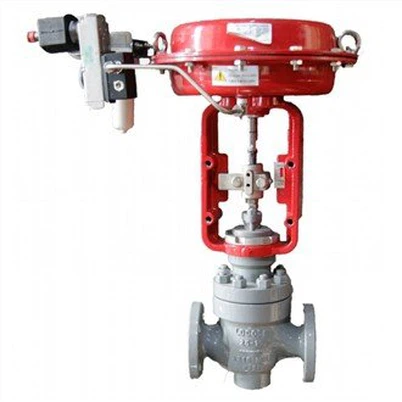
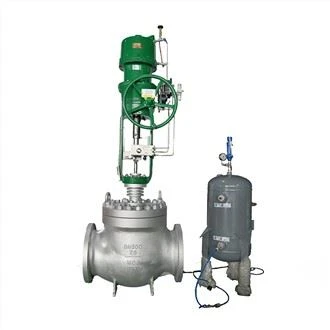
Self-operated control valve is a new type of control valve that has become popular in recent years. It requires neither manual adjustment nor external (such as electric, pneumatic) power adjustment. It is precisely because of this feature that it is deeply loved and respected by people in the industry. The use of self-operated control valves is not only convenient and simple, but also saves resources. The following editor will take you to understand the advantages and disadvantages of self-operated regulating valve!
Self-operated control valve is a new type of control valve. Compared with the manual control valve, its advantage is that it can be adjusted automatically; compared with the electric control valve, its advantage is that it does not require external power. The application practice has proved that in the closed water circulation system (such as hot water heating system, air conditioning chilled water system), the correct use of this valve can easily realize the flow distribution of the system; it can realize the dynamic balance of the system; it can greatly simplify the system Debugging work; can stabilize the working state of the pump, etc.
Self-operated pressure regulating valve (with condenser) ZY self-operated pressure regulating valve (self-operated pressure control valve) does not require external energy, uses the energy of the adjusted medium itself as the power source, introduces the actuator to control the position of the spool, and bends the two ends of the valve. Differential pressure and flow, so that the pressure before the valve (or after the valve) is stable. It has the advantages of sensitive action, good sealing performance and small fluctuation force of pressure set point.
The self-type pressure control valve has three structures of single seat (ZZYP), sleeve (ZZYM) and double seat (ZZYN); the actuator has two types of diaphragm type and piston type; type) and pre-valve pressure regulation for pressure relief (type K). The nominal pressure level of the product is DN15~250, and the valve body diameter ranges from DN15 to 250; the leakage level has three grades of II, IV and VI; the flow characteristics are quick opening; It can be combined as needed to meet the user's working conditions.
Advantages of self-operated control valve
(1) The adjustment precision is high.
(2) The detection accuracy of the actuator is high.
(3) The valve action is sensitive and the operation is simple.
(4) The control valve has fast response speed and precise control.
(5) It can work under the condition of no electricity and no gas, saving energy.
The self-operated control valve has the advantages of simple structure, so that we will have less workload in daily maintenance, and the pressure set point can be adjusted in a wide range. In order to facilitate consumers to continuously adjust within the set range, the valve The pressure balance mechanism is adopted, which can make the regulating valve respond sensitively, control accurately, and can regulate the medium with low corrosiveness, or the flowing medium such as water, oil, air, etc., and the non-corrosive gas below 350 degrees Celsius. The self-operated control valve can also adjust the high temperature medium, but it must be equipped with accessories such as condenser and isolation pipe. Only in this way can the self-operated control valve be able to adjust the high temperature medium safely and effectively.
The amount of medium behind the valve is reduced. When there is no dosage, or when the dosage is intermittent, the regulating valve will leak. This is a negative impact caused by the simple structure of the self-operated regulating valve, but it does not matter, we generally give priority to the continuous use of the medium. Choose a self-operated control valve.