Remote control and automation applications of high-pressure control valves
Leave a message
High-pressure control valves play a vital role in numerous industrial production sectors, such as petrochemicals, power generation, metallurgy, and pharmaceuticals. They precisely control the pressure, flow rate, and direction of fluids, ensuring stable, safe, and efficient operation of industrial processes. For example, in the petrochemical industry, high-pressure control valves regulate pressure and material flow within reactors to ensure chemical reactions proceed under optimal conditions. In the power generation industry, they control steam flow in steam pipelines to adjust generator power output.
With the continuous advancement of industrial automation technology, higher requirements are being placed on the remote control and automation applications of high-pressure control valves. Implementing remote control and automation of high-pressure control valves not only improves production efficiency and reduces labor costs, but also enhances system reliability and safety, enabling timely response to various emergencies. Therefore, exploring the key technologies for remote control of high-pressure control valves and how they collaborate with other equipment in automated applications is of great practical significance.

Key technologies or equipment support for remote control of high-pressure control valves
Communication technology
Wired communication technology
Industrial Ethernet is used for remote control of high-pressure control valves. Taking Profinet as an example, it has the advantages of high transmission speed and high transmission stability, and can meet the speed requirements of industrial sites. Industrial Ethernet can meet the timeliness requirements of remote control of high-pressure control valves. The control room can obtain information such as valve opening, pressure, flow, etc. in a timely manner. At the same time, the control room can send commands to the valve to control the operation of the valve. The relevant standards for industrial Ethernet are the IEC 61158 series of standards. This standard stipulates the physical layer, data link layer, application layer, etc. of industrial Ethernet. This ensures that equipment from different manufacturers can be interconnected. Fieldbus directly connected between field equipment and control systems, such as Foundation Fieldbus FF and Profibus-PA. (1) Foundation Fieldbus FF is a fully digital communication protocol that can directly connect field sensors, actuators and other equipment with control systems, introduces intermediate links, and improves the reliability and real-time performance of the system. In remote control of high-pressure control valves, the FF bus can transmit various valve parameter information in a timely manner, such as pressure, temperature, opening, etc., thus facilitating timely management of the control system. (2) Profibus-PA is specifically designed for process automation and is inherently safe. It is often used in hazardous environments such as flammable and explosive environments. It has a wide range of applications, such as valve control in the chemical and petroleum industries. The Profibus-PA bus can connect many high-pressure control valves to form a whole for centralized monitoring and management. Standard: IEC 61158-2 (FOUNDATION Fieldbus Specification).
Wireless Communication Technology
Using wireless local area networks (WLANs) for wireless remote control of high-pressure control valves offers users a convenient and flexible transmission method. For large factories and mines, where wired cabling is difficult and costly, WLANs can overcome these drawbacks. WLANs based on standards such as IEEE 802.11n currently offer high transmission rates and good interference immunity. However, in industrial sites, signal coverage issues still exist and they are susceptible to interference from other wireless signals. WLAN communication stability can be improved by adding access points (APs), improving antenna design, and employing anti-interference technologies. Industrial wireless sensor networks (IWSNs), a new technology developed in recent years, are widely used in the remote monitoring and control of high-pressure control valves. Industrial wireless sensor networks consist of numerous untethered sensor nodes that sense physical signals such as pressure, temperature, and opening and transmit them to a control center via wireless communication modules. Compared to wired industrial sensor networks, industrial wireless sensor networks offer advantages such as lower wiring costs and easier scalability. The article "Industry Wireless Sensor Networks: Challenges, Design Principles, and Technical Approaches" comprehensively explores the technical challenges, principles, and methods of industrial wireless sensor networks.
Sensor Technology
Pressure Sensors
Pressure sensors are a crucial component of remote control systems for high-pressure control valves. Installed at the valve's inlet and outlet, they convert pressure signals into electrical signals and transmit them to the control system. For example, high-pressure control valves in petrochemical pipelines adjust pressure by adjusting the valve opening according to pressure fluctuations within the pipeline. The pressure sensor, installed within the pipeline, accurately and promptly transmits these pressure changes to the control system. The control system, based on the pipeline pressure and pre-set data, issues a control signal to adjust the valve opening, thereby controlling pipeline pressure. Pressure sensors manufactured by Honeywell in the United States offer high accuracy, reliability, stability, and widespread application. The product manual provides a detailed description of the pressure sensor's operating principles, performance parameters, and usage.
Position Sensors
Position sensors measure the opening position of high-pressure control valves, enabling remote control. Commonly used types include LVDTs and resolvers. LVDTs convert the valve's linear displacement into an electrical signal output, offering excellent linearity and high measurement accuracy. They are primarily used in applications where valve opening measurement is critical. Resolvers measure the valve's rotational angle and feature a simple, reliable structure and strong interference resistance. A position sensor feeds information about the high-pressure control valve's opening position back to the control system. Based on the received valve position signal and the required deviation, the control system adjusts the control command signal sent to the valve to achieve the desired valve opening, thereby achieving precise control of the valve position. Technical information from the German company Trck explains the operating principles, installation, and application examples of LVDTs and resolvers.
Flow Sensors
Flow sensors measure the flow rate of fluid through a high-pressure control valve and transmit the flow signal to a remote control system, enabling precise adjustment of the valve opening to achieve flow control. For example, controlling the flow rate of reactants in a chemical reaction directly affects whether the reaction proceeds according to the preset stoichiometric ratio. A flow sensor measures the flow rate of fluid through a high-pressure control valve and transmits the signal to a remote control system. The remote control system adjusts the valve opening based on the received flow signal and other signals (such as pressure and temperature) to achieve precise flow control. The ISO 5167 series of standards specifies the measurement methods, accuracy, and installation procedures for flow sensors.
Actuator Technology
Electric Actuator
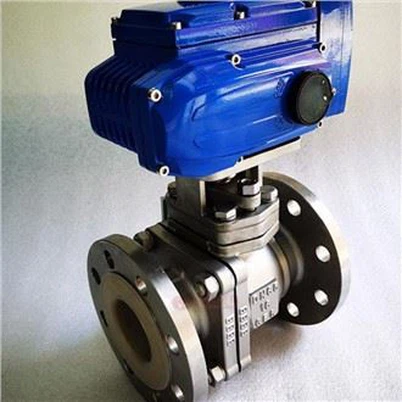
The key component of remote control for high-pressure control valves is the electric actuator. This actuator receives electronic control signals and controls the valve's opening. It uses a motor to drive the valve open and close, changing the valve's opening state, thereby converting electrical energy into mechanical energy. Electric actuators offer advantages such as high control precision, fast response, and remote control capabilities. For example, electric actuators from ABB (Switzerland) utilize mathematical control equations to ensure the valve's opening does not deviate from the desired value. Their advanced mechanical structure also ensures stable operation. The electric actuator of a high-pressure control valve is connected to a remote control system. The remote control system's control unit issues control commands to the electric actuator via a control interface. Upon receiving these commands, the electric actuator drives the valve to change its opening. Simultaneously, the electric actuator feeds back the current valve opening to the control unit, achieving constant-value control. The control unit, connected to the remote control system, drives the electric actuator according to the control program to control the valve's opening, thereby achieving control of the entire system. The control unit typically sends a signal to the electric actuator via a control interface. Upon receiving the signal, the electric actuator drives the valve to change its opening and transmits the current valve opening back to the control unit via the control interface, thus achieving constant-value control within the control system. The relevant product manuals provide information on the control principles and installation and commissioning methods of electric actuators.
Pneumatic Actuators
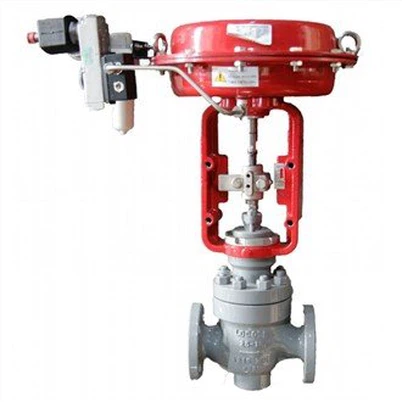
Pneumatic actuators are also commonly used in the remote control of high-pressure control valves. Due to their ease of operation, fast response, leak-free operation, ease of maintenance, and safety, they are particularly suitable for flammable and explosive environments. Pneumatic actuators are powered by compressed air, converting the pressure energy of the gas through cylinders and pistons to mechanically rotate the valve shaft. As compressed air is easily contaminated, its quality must be guaranteed, requiring, for example, the use of an air compressor, filter, and pressure reducing valve. Pneumatic control systems also require considerations such as air path selection, pneumatic component selection, and proper control logic. The ISO 5599 series of standards specifies technical requirements, performance, and testing specifications for pneumatic actuators to ensure their quality and standards.
Control System Technology
Programmable Logic Controller (PLC)
The core component of a high-pressure control valve remote control system is the PLC. It boasts extensive logic control, digital computation, and communication capabilities. It receives signals from pressure sensors, displacement sensors, flow sensors, and other sensing elements. After performing calculations and logical analysis, it issues control commands to drive electric or pneumatic actuators, thereby controlling the valve. The PLC continuously receives signals from pressure sensors, displacement sensors, flow sensors, and other devices, and performs logical calculations and data processing according to pre-programmed programs. Based on the calculation and processing results, it issues control commands to drive the electric or pneumatic actuators, thereby controlling the valve. The PLC can also communicate with other automation equipment to facilitate information transfer and resource sharing. The S7-1200/1500 series PLCs manufactured by Siemens (China) Co., Ltd. feature high performance, high reliability, and easy programming, making them widely used in industrial control. This technical manual describes the architecture, program blocks and instructions, and communication interface modules of the Siemens S7-1200/1500 series PLCs. Distributed Control Systems (DCS)
In large-scale industrial projects, DCS is a crucial component for remote control of high-pressure control valves. A DCS is a centralized control, decentralized management system. It divides the entire production control area into several control stations, each responsible for controlling a group of high-pressure control valves and other common equipment. Communication systems enable information exchange between these stations, enabling centralized management and unified scheduling. The control center can monitor each control station, providing timely insights into the control site's conditions and formulating appropriate control strategies. For example, in a large-scale chemical production project, a DCS can centrally monitor and control high-pressure control valves distributed throughout the production process, thereby improving product quality and production efficiency. IEC 61131-3 specifies programming languages, modeling languages, and communication protocols for DCSW, ensuring its openness and interoperability.
Industrial Internet of Things (IIoT) Platform
Industrial Internet of Things (IIOT) Platform: The IIoT platform enables remote control of high-pressure control valves, allowing enterprises to remotely monitor their operating conditions. Various sensors installed on high-pressure control valves collect operational data and transmit it to the Industrial Internet of Things (IIoT) platform. The IIoT platform analyzes this data through cloud computing, big data, and other analytical tools, presenting valve operating trends and fault predictions. The IIoT platform can diagnose and perform predictive maintenance on high-pressure control valves. If a valve malfunction or potential failure occurs, the IIoT platform can promptly send alerts to company management and provide resolution recommendations. The report, "Indistral Internet of Things: Market Trends, Challenges and Opportunities," analyzes the technical content, application scenarios, and evolving trends of the IIoT platform.
How do high-pressure control valves work together with other automation equipment in automation applications?
Cooperation with pumps
The coordinated use of high-pressure control valves and pumps is essential. Pumps are the power source for fluid transport, requiring fluids to maintain a certain pressure and flow rate. High-pressure control valves adjust valve openings to control fluid flow and pressure according to system needs. For example, in a chemical production material transport pipeline, as a pump delivers material to a reactor, the pressure inside the reactor increases. The high-pressure control valve continuously decreases its opening, reducing the material flow rate to maintain constant system pressure. When the reactor requires more material, the valve opens wider, increasing the material flow rate. By linking the pump and high-pressure control valve through a control system, upper and lower limits for pressure or flow signals can be set according to production requirements. When the actual operating value deviates from these limits, the control system adjusts the valve opening and the pump's power system, such as the pump speed or outlet valve opening, to achieve stable system operation and energy-saving control. The relevant fluid transport system design manual, "Chemical Process Pump Design Manual," provides detailed information on pump and valve selection, matching, and coordinated operation. Working in Collaboration with Heat Exchangers
In a heat exchange system, a high-pressure control valve and heat exchanger work together to ensure proper and controlled heat exchange. A heat exchanger is a device that transfers heat from one medium to another. The heat exchange capacity of a heat exchanger is related to the flow rate (i.e., flow rate) of the fluid within it. A high-pressure control valve regulates the flow rate based on the inlet and outlet temperatures and heat load. For example, in an air conditioning system, a heat exchanger is used to cool or heat air. When the indoor temperature rises, the high-pressure control valve increases the refrigerant flow through the heat exchanger, increasing its cooling capacity and lowering the indoor temperature. When the indoor temperature drops to the desired value, the valve reduces the flow rate to maintain the indoor temperature. Sensors and control systems closely link the high-pressure control valve and heat exchanger, enabling closed-loop control of the heat exchange system, typically using a PID control algorithm. Sensors provide the control system with inlet and outlet temperature signals. Based on the temperature deviation, the control system calculates the control variable and adjusts the valve opening to maintain a constant temperature at the heat exchanger outlet. Heat Exchange System Design Specification GB/T 151-2014, "Heat Exchangers," stipulates the design, selection, and performance requirements of heat exchangers. The automatic control theory textbook, "Principles of Automatic Control" (edited by Hu Shousong), discusses the principles and applications of the PID control algorithm.
Cooperation with Automated Instrumentation
High-pressure control valves are interconnected with automated instruments (such as pressure gauges, thermometers, and flowmeters). The automated instruments measure pressure, temperature, and flow at the valve inlet and outlet and transmit these signals to the underlying control system. The computer receives these signals, determines whether the valve is functioning properly, and controls the valve opening according to production process requirements. Changes in valve opening can also affect instrument measurement results. For example, changes in valve opening can alter the flow rate and pressure of the fluid in the pipeline, which in turn changes the measurement signals of the pressure gauge and flowmeter. Project documentation for the integration of industrial automation control systems requires integrating instrument measurement signals with valve control to achieve control and regulation of industrial production parameters. For example, in chemical production, the flow rate signal measured by the flowmeter is compared with the set flow rate signal, and the computer adjusts the opening of the high-pressure control valve to maintain the flow rate near the set value. Automation instrumentation technical manuals, such as those from Rosemount, explain the instrument's operating principles and technical specifications. Industrial automation control system integration project documentation discusses the coordinated control of instruments and valves.
Collaboration with Industrial Robots (in specific industrial scenarios)
In some automated production processes, high-pressure control valves and industrial robots work together to complete specific process tasks. For example, in material transportation and reaction processes in chemical production, industrial robots can control the opening and closing of valves and adjust flow rates based on the production process. When adding a certain material to a reactor, the industrial robot can use its manipulator to place the material in the appropriate position. The system then controls the opening of the high-pressure control valve to adjust the material flow rate and addition timing. After addition is complete, the industrial robot controls the valve to close, completing the addition. Communication protocols are used to enable data communication and collaborative control between the high-pressure control valve and the industrial robot, meeting the synchronization requirements of timing and movement. EtherCAT, a protocol specification, offers high-speed, real-time, and synchronous features, making it suitable for the precise coordinated control requirements between industrial robots and valves. A related industrial robot application case study is reported in the journal "Industrial Robots in Chemical Process Industry: Applications and Challenges."
This article discusses the communication, sensor, actuator, and control system technologies involved in remote control of high-pressure control valves. It points out that these technologies and equipment work together to enable remote control and automated operation of high-pressure control valves, achieving precise remote control. It also discusses how high-pressure control valves collaborate with pumps, heat exchangers, automated instruments, industrial robots, and other equipment in automated applications. It argues that collaborative operation can improve the overall performance of industrial production systems. High School Physics Knowledge Introduction: With the increasing demand for automated control in industrial production, the remote control and automated application of high-pressure control valves are becoming increasingly sophisticated. Remote control of high-pressure control valves involves communication, sensor, actuator, and control system technologies. These technologies and equipment work together to enable remote control and automated operation of high-pressure control valves, achieving precise remote control. High-pressure control valves collaborate with pumps, heat exchangers, automated instruments, industrial robots, and other equipment in automated applications. This collaborative operation can improve the overall performance of industrial production systems. High School Physics Knowledge: Remote control and automated application of high-pressure control valves will develop towards intelligent, integrated, and green technologies. Intelligentization: Applying technologies like artificial intelligence and machine learning to monitor the operation of high-pressure control valves, diagnose faults, and perform preventive maintenance. High school physics knowledge Integration: Integrating high-pressure control valves with more automated equipment and systems enables better collaboration. High school physics knowledge Greening: Reducing energy consumption and pollution through control strategies and equipment selection. With the development of these technologies, remote control and automated applications of high-pressure control valves will play a greater role in the industrial sector, promoting the transformation, upgrading, and sustainable development of industrial production.