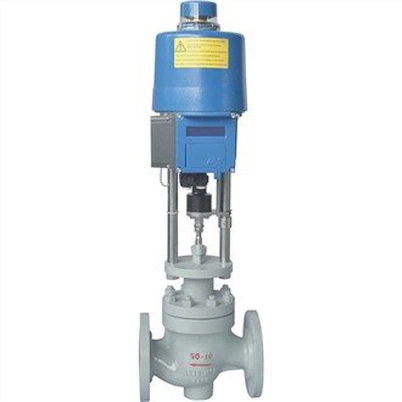
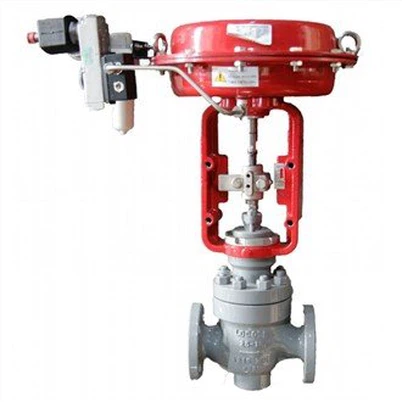
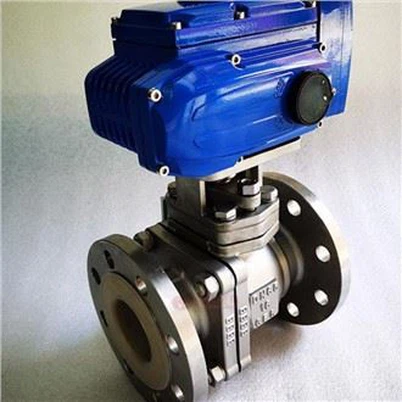
Electric single-seat control valve actuator troubleshooting and maintenance guide
Leave a message
The role of electric single-seat regulating valve in industrial control
Electric single-seat control valve is the core component of industrial automation control system, it has a wide range of applications in petroleum, chemical, electric power, metallurgy and other industries. Its core function is to precisely control the flow, pressure and temperature of the fluid medium to ensure the stability and safety of the entire production process.
The impact of actuator failure on the production process
As a key component of the electric single-seat control valve, the actuator is responsible for converting the control signal into mechanical operation to achieve the purpose of adjusting the valve opening. The reliability of the actuator is directly related to the stable operation of the whole production system. If the actuator fails, the valve will not operate normally, which will further hinder the smooth progress of the entire production process, and may even lead to the occurrence of safety accidents.
Purpose and importance of the guide
The purpose of this guide is to provide maintenance personnel with a comprehensive and systematic troubleshooting and repair plan for electric single-seat control valve actuators, so that they can quickly identify the root cause of the failure and take appropriate repair measures to ensure the normal operation of the equipment and ensure the safety of the production process.
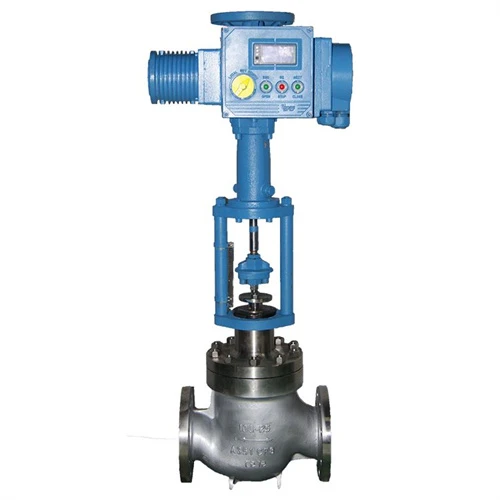
Electric single-seat control valve actuator overview
The basic structure and working principle of the executive mechanism
The operating parts of the electric single-seat regulating valve usually include the motor, the decelerating device, the position sensor and the control unit. Because the valve core is subjected to resistance in the rotation process, the flow rate changes, so the electric adjustment method is used to realize the automatic control of the valve opening. The working mechanism of the device is that after receiving the control signal, the drive motor is rotated, and then decelerated through the reducer, and then the valve stem is moved to adjust the opening degree of the valve. Through the position sensor, we can obtain the actual opening data of the valve in real time and compare it with the preset value to build a closed-loop control system.
Characteristics and application range of electric actuator
Electric actuator has been widely used in the application scenarios requiring precise control of fluid media because of its advantages of high control accuracy, fast response, easy remote control and automation. As a special type of mechanical device, electric actuator has been used more and more widely. Especially in those industries with high standards for safety and environmental protection, electric actuators have become indispensable key equipment.
Electric single-seat control valve actuator common fault types
Motor fault
- Starting difficulty: may be due to the supply voltage is too low, motor winding damage or mechanical parts stuck.
- Unstable operation: the performance of the motor vibration, loud noise or unstable speed, may be related to bearing wear, poor coupling alignment and other factors.
- Overheat: overload operation for a long time or poor heat dissipation may lead to overheating, which may burn the motor in serious cases.
Transmission fault
- gear wear: After long-term use, the transmission gear may wear, resulting in reduced transmission efficiency and increased noise.
- Chain breakage: as one of the transmission parts, the chain may break if it is subjected to excessive tension or fatigue damage.
- Bearing damage: Bearing damage can cause the transmission parts to work poorly, or even stuck.
The controller and sensor are faulty
- Signal loss: The communication line between the controller and the sensor is faulty or the sensor is damaged. As a result, the control signal may be lost.
- Feedback error: the valve opening information fed back by the sensor is inconsistent with the actual, which affects the control accuracy.
- Control logic confusion: internal program errors or external interference of the controller may lead to control logic confusion, so that the valve cannot operate in a predetermined manner.
The power supply and circuit are faulty
- Voltage fluctuation: Unstable power supply voltage may lead to abnormal operation of the motor, or even damage.
- Short circuit: A short circuit fault in the circuit may cause serious consequences such as fire.
- Disconnected: The device cannot work properly if the circuit is disconnected.
Mechanical structure failure
- Seal leakage: Damaged or aged valve seal components may result in media leakage.
- stem stuck: Increased friction between the stem and the packing box may cause stem stuck.
- Loose connection: Loose connections between device components may affect the overall performance and security of the device.
How to diagnose the fault cause of electric single-seat regulating valve actuator
Observation and analysis of fault phenomena
First of all, the maintenance team needs to carefully observe the failure, grasp the operating status of the equipment, abnormal sound, smell and other details, so as to initially determine the potential type of failure.
Test with professional tools
By using specialized test tools such as multimeters and oscilloscopes, we conducted in-depth tests on key components such as motors, circuits and sensors, thereby obtaining accurate electrical parameters and signal waveforms, and further exploring possible causes of failure.
Check circuit connections and wiring
Carefully check whether the circuit connection is firm and the wiring is reasonable, and eliminate the fault caused by poor contact or aging of the line.
Simulated operation and fault recurrence
By simulating the operation of the device, you can try to reproduce the fault phenomenon, which helps to locate the fault cause more accurately.
Consult technical documentation and fault logs
By referring to related technical documents and past fault records, you can better understand the performance parameters of the device, common faults, and corresponding solutions, providing a strong reference for fault diagnosis.
The priority of electric single-seat control valve actuator troubleshooting
Sort by fault impact degree
First, troubleshoot the faults that have the greatest impact on the production process to ensure the normal operation of key equipment.
Consider the order of repair difficulty versus cost
According to the repair difficulty and cost of the fault, the fault with low repair difficulty and low cost is prioritized.
Sorting of failure frequency and urgency
Troubleshoot and handle frequent or emergency faults first.
Develop comprehensive screening plan and implementation steps
According to the above sorting principles, develop a detailed troubleshooting plan, clarify the troubleshooting steps, responsible persons and time nodes, and ensure the orderly investigation work.
Safety precautions for maintenance of electric single-seat control valve actuator
Safety specifications for power off and isolation operations
Before the maintenance work, the power supply of the device must be cut off, and isolation measures must be taken to prevent accidental startup and death.
Use of personal protective equipment
Maintenance personnel should wear personal protective equipment such as insulating gloves and goggles to ensure personal safety.
Measures to avoid accidental start-up and mechanical injury
During the maintenance process, clear warning signs should be set up to prevent others from misoperating the equipment. At the same time, for parts that may cause mechanical damage, fixed measures should be taken.
Maintenance site safety management
The maintenance site should be well ventilated, clean and orderly to avoid the accumulation of debris causing fire and other safety hazards. At the same time, clear safety signs and emergency passageways should be set up.
Emergency response plan and rescue preparation
Formulate emergency response plans, clarify emergency rescue measures and responsible persons. In case of an unexpected situation, it can respond quickly and deal with it properly.
How to prevent the common failure of electric single-seat control valve actuator
Regular maintenance and maintenance schedule
Make regular maintenance and maintenance plan, carry out regular inspection, cleaning and lubrication of equipment, and find and deal with potential faults in time.
Use high quality spare parts and accessories
Select high-quality spare parts and accessories for replacement and repair to ensure the overall performance and reliability of the equipment.
Optimize operating conditions and parameter Settings
According to the actual operation of the equipment and the characteristics of the medium, optimize the operating conditions and parameter Settings to reduce the load and wear of the equipment.
Strengthen the training and management of operators
Conduct regular training for operators to improve their operation skills and safety awareness. At the same time, strengthen the management of equipment to ensure that the equipment operates under the specified working conditions.
Introduce intelligent monitoring and early warning system
Intelligent monitoring and early warning system is introduced to carry out real-time monitoring and data analysis on the operating status of the equipment, discover hidden faults in advance and take preventive measures.