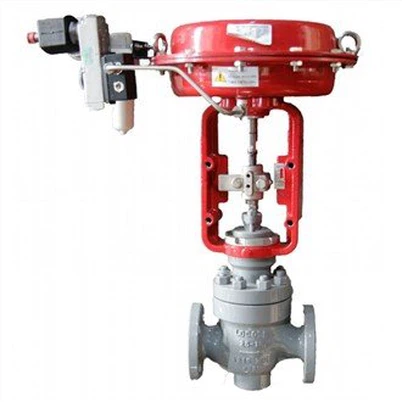
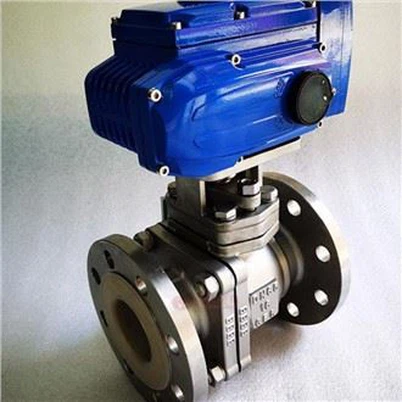
Analysis and Elimination of Jamming Faults in High-Pressure Control Valves
Leave a message
In numerous industrial sectors such as petroleum and chemical processing, power generation, and metallurgy, high-pressure control valves play a vital role. Acting like "traffic controllers" within industrial processes, they precisely regulate the flow rate, pressure, and direction of fluid media, ensuring the stable and efficient operation of the entire production system.
Should a high-pressure control valve experience sticking malfunction, it acts like a critical traffic artery becoming blocked. This results in impeded fluid transport, subsequently impacting the continuity and stability of the entire production process. Mild cases can lead to reduced product quality and lower production efficiency, while severe cases may trigger safety incidents, causing significant economic losses for the enterprise.
Consequently, conducting an in-depth analysis of the causes behind high-pressure control valve sticking malfunctions and mastering effective diagnostic and troubleshooting methods holds substantial practical importance.
Common Causes of High-Pressure Control Valve Jamming
Mechanical Structural Factors
Wear and Deformation of Valve Plug and Seat: During prolonged use, the frequent contact and friction between the valve plug and seat, especially under the scouring effect of high-pressure, high-velocity fluids, can lead to wear and deformation. When the sealing surfaces of the plug and seat are no longer flat, it compromises the valve's ability to close tightly. This unevenness also increases resistance to plug movement, causing binding or sticking.
Bending and Corrosion of Valve Stem: The stem, a critical component connecting the actuator to the valve plug, can bend due to external impact or improper installation. A bent stem interferes with the valve body or other parts during operation, resulting in sticking. Additionally, long-term exposure to damp or corrosive environments causes stem corrosion. The resulting rust buildup increases friction during stem movement, leading to valve sticking.
Accumulation of Internal Debris: Fluids may carry solid particles, fibers, or other contaminants. This debris gradually accumulates inside the valve, particularly within clearances between the plug and seat and around the stem. Such buildup obstructs the normal movement of both the plug and stem, triggering sticking failures.
Fluid Medium Factors
· Presence of solid particles, fibers, or other impurities in the medium: Beyond accumulating inside the valve body and causing sticking, larger particles or longer fibers in the medium may become directly lodged between the valve plug and seat. This prevents the valve from closing or opening properly, resulting in sticking.
· Excessively high or low viscosity of the medium: The viscosity of the medium affects its flow characteristics within the valve. High viscosity increases flow resistance, requiring the valve plug to overcome greater force during movement and making sticking more likely. Conversely, very low viscosity can cause turbulence inside the valve, leading to vibration and impact. This damages components like the plug and seat, potentially causing sticking.
· Component damage due to corrosive media: Certain fluids, such as acids or alkalis, are highly corrosive. Prolonged exposure can corrode the valve's metal parts, causing surface roughness, thinning, or even perforations and cracks. Corroded components not only lose strength but also undergo changes in surface topography, increasing resistance to the plug's movement and causing sticking.
Operational and Maintenance Factors
· Long-term improper operation, such as frequent cycling or excessive pressure fluctuations: Frequent cycling of high-pressure control valves accelerates wear on components like the plug and seat, stem and body, shortening valve service life and increasing sticking risk. Simultaneously, excessive pressure fluctuations expose the valve to alternating stresses, which can cause fatigue damage to components and lead to sticking malfunctions.
· Untimely maintenance, lacking regular cleaning and lubrication: Failure to clean valves periodically allows impurities to accumulate inside the valve body, causing sticking. Additionally, moving parts like the stem require regular lubrication to reduce friction. Insufficient lubrication increases friction, making valve movement stiff and prone to sticking.
· Improper installation, such as stem misalignment or loose connections: Stem misalignment subjects the plug to uneven forces during movement, resulting in sticking. Loose connections may cause vibration and operational noises during valve function, impairing normal operation and potentially leading to sticking issues over time.
Systematic Diagnosis of Sticking Points in High-Pressure Control Valves
Visual Inspection
- Check for external leakage: First, inspect the valve exterior for signs of leakage, such as fluid seepage at the valve body, bonnet, or flange connections. Leaks not only waste media but may also indicate internal component damage, potentially linked to sticking issues.
- ·Observe for deformation: Examine the valve for visible distortion, particularly obvious bending, twisting, or deformation in the body and bonnet. Deformation can alter internal clearances, disrupting proper plug-seat alignment and causing sticking.
- ·Inspect corrosion levels: Assess surface corrosion severity and location. Severe corrosion may roughen surfaces, increase movement resistance, or cause component failure – all potential sticking triggers.
- ·Test stem movement: Observe the valve stem for smooth operation, checking for stiffness or misalignment. Manually rotate the stem to feel movement resistance; any roughness or noticeable binding suggests sticking problems.
Operating Parameter Analysis
Compare the valve's normal operating parameters (pressure, flow rate, temperature) against current readings. Analyze for abnormal changes. Sudden pressure increases/decreases, reduced flow, or abnormal temperatures may indicate valve sticking. For instance, if sticking reduces the flow area, flow rate typically decreases while pressure may rise.
Verify alignment between the indicated valve opening position and its actual position. A discrepancy suggests the valve may be sticking and failing to reach the commanded position accurately.
Internal Structure Inspection
- Valve Disassembly: This provides the most direct internal inspection method. Before disassembly, complete preparatory steps: isolate the valve by closing upstream/downstream valves, drain the medium, and implement safety measures. After disassembly, meticulously examine components (plug, seat, stem) for wear and corrosion. Inspect the plug/seat sealing surfaces for scratches, wear, or deformation. Check the stem for bending, corrosion, or wear.
- Borescope Inspection: Tools like borescopes enable inspection without full disassembly. They allow visual examination of the valve interior for debris buildup or scaling, particularly in hard-to-see areas like the plug/seat clearance or around the stem.
Application of Specialized Testing Equipment
- Vibration Analysis: Use vibration analyzers to monitor valve operation. Sticking faults alter the vibration signature of moving parts. Collecting and analyzing vibration signals helps diagnose mechanical issues like plug binding or component looseness.
- Ultrasonic Leak Detection: Apply ultrasonic technology to detect internal leaks. Ultrasonic detectors pick up high-frequency sound generated by leaks. Analyzing these signals pinpoints leak locations and severity. Internal leakage can impair valve function and contribute to sticking failures.
Targeted Troubleshooting Methods and Preventive Measures for Sticking High-Pressure Control Valves
Targeted Troubleshooting Methods
Mechanical Structure Fault Elimination
For worn or deformed valve plugs and seats: Assess the extent of wear or deformation. Light wear can often be addressed by grinding or polishing the sealing surfaces to restore flatness. Severely worn or significantly deformed components should be replaced with new valve plugs and seats.
Straighten bent valve stems using specialized straightening equipment. During straightening, carefully control the force applied and the precision of the alignment to avoid over-straightening, which could cause the stem to fracture. Concurrently, remove rust from the stem surface and implement rust prevention measures, such as applying rust-resistant paint or zinc plating.
Clear debris from inside the valve body using methods like compressed air blowing or high-pressure water flushing. Stubborn deposits may require cleaning with specialized chemical agents. After cleaning, verify that all internal passages within the valve body are completely clear and unobstructed.
Fluid Medium Issue Resolution
· Install filters: An effective method for removing solid particles, fibers, and impurities from media. Select filters with appropriate specifications and precision based on medium characteristics and flow requirements. Perform regular cleaning and filter cartridge replacement to maintain filtration efficiency.
· Select compatible materials/seals: Choose valve materials and sealing configurations according to medium properties. For highly corrosive media (e.g., acids/alkalis), use corrosion-resistant materials like stainless steel or plastics. For high-temperature media, employ heat-resistant materials and seals. Optimize sealing types (soft/hard seals) to enhance reliability.
· Adjust medium parameters: Maintain viscosity within optimal ranges through heating, cooling, or dilution methods to meet valve operational requirements.
Operational and Maintenance Improvements
· Standardize operating procedures: Establish detailed protocols specifying valve cycling frequency and pressure control limits. Ensure strict adherence by operators to prevent excessive cycling and pressure fluctuations.
· Implement maintenance schedules: Conduct regular cleaning (removing internal/external contaminants), lubrication (using appropriate lubricants at specified intervals/locations), and comprehensive component inspections to identify potential issues.
· Correct installation defects: Reinstall valves immediately if stem misalignment or loose connections are detected. Use specialized tools and measuring instruments to ensure precision alignment.
Preventive Measures
Selection Optimization
· Match valves to process requirements: Consider medium properties, operating pressure, temperature, and flow rates during selection. Example: Use robust valves with high flow capacity for high-pressure/large-flow applications; corrosion-resistant valves for aggressive media.
· Reference successful case studies: Leverage proven applications in similar operating conditions to improve selection accuracy.
Continuous Monitoring & Early Warning
· Deploy monitoring systems: Utilize sensors and data acquisition devices to track real-time parameters (pressure, flow, temperature, vibration). Transmit data to control centers for anomaly detection.
· Set alert thresholds: Trigger immediate alarms when parameters exceed limits, enabling preemptive intervention to prevent failure escalation.
Personnel Training
· Operator training: Educate personnel on valve structures, operating principles, procedures, and maintenance. Enhance troubleshooting skills to ensure proper operation and timely fault response.
· Technician development: Conduct regular technical exchanges and training for maintenance teams. Equip technicians with advanced diagnostics and repair techniques for efficient fault resolution.
Sticking malfunctions in high-pressure control valves represent a common industrial challenge with multifaceted causes spanning mechanical structure, fluid media, operational practices, and maintenance protocols. Accurate fault diagnosis necessitates systematic approaches, including visual inspection, operational parameter analysis, internal component examination, and specialized testing equipment.
Tailored solutions must address specific failure mechanisms: mechanical repairs for structural issues, fluid treatment for media-related problems, and procedural improvements for operational deficiencies. Concurrently, effective preventive measures – such as optimized valve selection, continuous monitoring with early warning systems, and comprehensive personnel training – significantly reduce failure occurrences.
Systematic diagnosis and targeted remediation form the cornerstone of resolving sticking faults. Only through thorough and meticulous assessment can root causes be accurately identified, enabling effective corrective actions. Proactive prevention further enhances valve reliability and service life by addressing failure sources at their origin.
As industrial technology evolves, fault analysis and resolution methodologies for high-pressure control valves will continue advancing. Intelligent monitoring systems and remote diagnostics, for instance, will see broader implementation, enabling real-time precision monitoring and rapid fault response. Concurrently, new materials and manufacturing processes will enhance valve performance and quality, further reducing sticking probabilities.
We can reasonably expect continuous innovation and practical refinement to yield progressively better solutions for sticking malfunctions, thereby providing robust safeguards for safe and stable industrial operations.