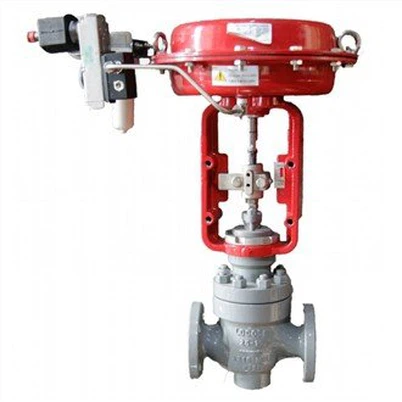
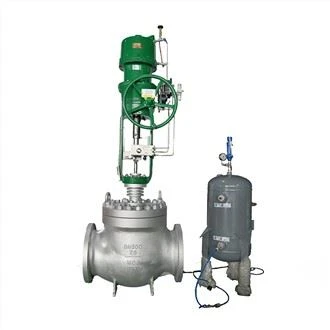
What type of valves are used for control valves?
Leave a message
Control valves are commonly used to regulate the flow, pressure, temperature, or level of a fluid in a system. Several types of valves can be utilized as control valves, depending on the specific application requirements. The most commonly used types of valves for control purposes include:
Globe Valve: Globe valves are popular control valves due to their good throttling capability and accurate flow control. They have a globe-shaped body with a movable disc or plug that can be positioned to control the flow through the valve.
Butterfly Valve: Butterfly valves are quarter-turn valves that use a disc as the closing mechanism. They are often used for large-scale applications where fast operation and low-pressure drop are required. Although they are primarily used for on-off control, they can also be used for throttling control.
Ball Valve: Ball valves are quarter-turn valves that use a hollow, perforated, or pivoting ball to control the flow. While they are commonly used as on-off valves, they can also provide modulating control depending on their design.
Diaphragm Valve: Diaphragm valves use a flexible diaphragm as the closure element. They are particularly suitable for controlling corrosive or abrasive fluids, as the diaphragm isolates the fluid from the valve body.
Plug Valve: Plug valves have a cylindrical or tapered plug with a hole through it as the closure element. They can be used for both on-off and throttling control, and they provide tight shut-off capabilities.
Needle Valve: Needle valves are precision valves with a long, tapered, needle-like stem and a relatively small orifice. They offer precise flow control and are commonly used in applications where fine adjustments are required.
Control Ball Valve: Control ball valves are designed specifically for flow control applications. They have a characterized ball with a V-notch or other special shape that allows precise control over the flow rate.
Pinch Valve: Pinch valves use a flexible tube or sleeve to control the flow. The valve is closed by pinching or squeezing the tube, which stops the flow completely. They are often used in applications where a completely unobstructed flow path is required.
These are some of the commonly used types of valves for control purposes. The selection of a specific valve depends on factors such as the application requirements, process conditions, fluid characteristics, and control system specifications.