what is a butterfly control valve
Leave a message
In vast industrial production systems, valves, as core components for controlling fluid flow, play an irreplaceable role. Valves are diverse and complex, encompassing multiple disciplines and fields, and have a profound impact on industrial development. From petrochemicals and power generation to water treatment and food and beverage production, valves ensure the smooth operation of the entire production process. With the advancement of science and technology, the variety of valves is constantly increasing. Among these valves, butterfly valves and control valves are two common and critical types. They not only regulate flow but also provide multiple functions, such as pressure balance and sealing protection. So, can butterfly valves truly be considered control valves? Is there a connection between the valve and the valve body? This question may seem simple on the surface, but it actually involves multiple aspects, including the valve's function, design characteristics, and application scenarios. It is extremely important for the appropriate selection of valves and system optimization in the industrial sector.
Basic Concepts of Butterfly Valves and Control Valves
Definition, Operating Principle, and Common Applications of Butterfly Valves
A butterfly valve is a simple regulating valve consisting primarily of a valve body, stem, butterfly plate, and sealing device. Because the butterfly disc has a certain inclination in the direction of the medium's flow, it can be used as both a throttling element and a speed regulator or control valve. Its operation is to adjust the size of the fluid passageway by rotating the disc, thereby regulating and controlling the fluid flow rate. As the fluid flows through differently shaped passageways, the disc deforms accordingly to accommodate the changes in the fluid's flow direction. When the disc rotates perpendicular to the fluid passageway, the valve automatically closes, preventing the flow of fluid. When the disc rotates perpendicular to the fluid passageway, the valve opens, allowing the fluid to enter the pipe or equipment. When the disc rotates parallel to the fluid passageway, the valve fully opens, ensuring smooth flow.
Due to their light weight, compact size, rapid opening and closing speed, and operational flexibility, butterfly valves are widely used in numerous industrial fields. This article focuses on the application of butterfly valves in underground coal mines and mine drainage projects. In ventilation system design, butterfly valves are often used to adjust air flow, thereby controlling ventilation effectiveness. In water supply and drainage systems, butterfly valves cut off or adjust water flow, facilitating pipeline maintenance and repair. In industries such as the chemical and petroleum industries, butterfly valves are also suitable for pipelines carrying various corrosive media.
Definition, Classification, and Core Functions of Control Valves
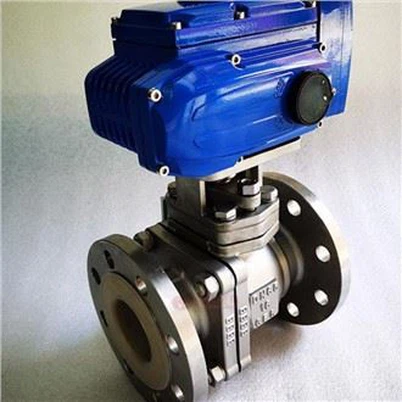
Control valves are actuators that play a key role in automatic control systems, precisely regulating key fluid parameters such as flow rate, pressure, and temperature. In industrial production, control valves are primarily used to change the direction and velocity of fluid flow within production systems. Control valves can be categorized into various types based on their structure and function, including regulating valves, globe valves, ball valves, and gate valves. With the advancement of science and technology, various new types of control valves have been introduced. Among these control valves, regulating valves are the most common. They automatically adjust the valve opening according to fluctuations in the control signal, thereby achieving precise control of fluid parameters.
The primary function of a control valve is to precisely adjust and stably control fluid parameters. With the continuous advancement of modern industrial technology, control valves have become an indispensable component of industrial production systems. Numerous production steps in industrial manufacturing processes impose strict standards on various fluid parameters, such as flow, pressure, and temperature. By integrating control valves with various control systems, these critical parameters can be ensured to remain within predetermined limits, thereby ensuring the stability of the entire production process and consistent quality of the final product.
Functional Similarities and Differences between Butterfly Valves and Control Valves
Similarities
Butterfly valves and control valves share some similarities in their functional characteristics. However, due to their different structural forms, they also differ significantly in their operating principles and design approaches. It's important to understand that these factors can both obstruct or regulate fluid flow to some degree. Therefore, they share the same structural principles and operating performance. Whether adjusting the fluid passage size of a butterfly valve by rotating the disc or controlling fluid parameters by adjusting the valve opening, their core purpose is to regulate and control the flow of fluid. These functions are primarily accomplished by the actuator installed within the butterfly valve, which consists of a valve body, valve seat, and drive mechanism. Furthermore, in certain basic systems, both butterfly valves and control valves can effectively control the flow and interruption of fluids. For example, in small ventilation or drainage pipes, butterfly valves can regulate fluid flow by fully closing or opening, while control valves also perform this core function.
Differences
· Regarding Control Precision: Control valves often offer a higher level of control capability, allowing for more precise adjustment of flow and other related parameters. For example, large-diameter, high-pressure fluid pipelines require multi-stage control valves to achieve stable flow control due to the complex piping system and wide fluctuations in the medium's pressure. During the design and production of control valves, we employ more sophisticated structures and cutting-edge control methods, such as intelligent positioners and high-precision sensors. This enables real-time monitoring and adjustment of the valve's opening degree, ensuring precise control of fluid parameters. Currently, commonly used ball valves are primarily sliding or rotary types. Butterfly valves offer relatively limited control accuracy and a wide range of adjustment procedures, making them difficult to adapt to production processes requiring extremely high control precision.
Control valves generally maintain stable operating conditions under varying pressures and temperatures. Therefore, control valves are widely used in many fields. Some highly efficient control valves can handle extreme environments such as high pressure, high temperature, or low temperature, ensuring stable operation under a variety of complex conditions. As a common valve, butterfly valves are characterized by compact structure, flexible operation, and high reliability. However, butterfly valves have some limitations in their ability to handle pressure and temperature. In high-pressure or high-temperature environments, the sealing and structural stability of butterfly valves may be adversely affected, further limiting their use in various applications.
Regarding Structural Complexity: Control valves are relatively complex in design and incorporate more high-precision components. The most commonly used valves are regulating valves and globe valves, which have the widest range of applications. In addition to their basic components, such as the valve body and stem, control valves typically incorporate additional equipment such as actuators, positioners, and sensors. These components work together to precisely control fluid parameters. Among valves, ball valves are the most common and widely used, but their structure is relatively complex. Butterfly valves have a relatively simple design, consisting primarily of a few key components: the valve body, stem, and disc. This makes them relatively simple to manufacture and maintain.
In what situations can butterfly valves be classified as a type of control valve?
Simple control applications with low control accuracy requirements
In certain simple control scenarios, where control accuracy is not critical, butterfly valves can be considered a type of control valve. While butterfly valves are widely used as control valves, their actual performance is often less than ideal due to structural limitations and factors such as the operating environment and conditions. For example, in the design of some small ventilation systems, the core goal is to adjust air flow to meet indoor ventilation needs, and the control accuracy requirements for air flow are relatively low. When outdoor temperatures are low, indoor humidity is high, requiring dehumidification. In this case, adjusting the opening of the butterfly valve allows for rough control of air flow, thereby achieving the basic function of the ventilation system. In some large air conditioning systems, such as central air conditioning systems, both air volume and temperature require precise control, and butterfly valves are crucial for these systems. Similarly, in some drainage systems, butterfly valves can adjust the flow amplitude to meet various drainage requirements. In these cases, butterfly valves perform functions similar to control valves.
Equipped with a High-Precision Actuator and Intelligent Control System
When a butterfly valve is equipped with a highly precise actuator and intelligent control system, its control performance can be significantly enhanced, achieving more precise control results. In this case, it can be considered a practical application of a control valve. A valve consists of a valve body and a valve seat. The valve body has a large volume. A regulating valve installed within the valve body changes the flow direction of liquid or gas to achieve the purpose of fluid transportation. A high-precision actuator can more accurately control the rotation angle of the butterfly disc, thereby achieving precise adjustment of fluid flow. The intelligent control system can monitor fluid parameters in real time and automatically adjust the opening degree of the butterfly valve according to preset values to ensure that fluid parameters remain stable. Therefore, for valves, it is crucial to use high-performance actuators and intelligent control systems. For example, in certain chemical production processes that require flow control, butterfly valves equipped with advanced actuators and intelligent control systems can achieve precise control of the flow of corrosive media to meet production process requirements.
Do the design features of a butterfly valve enable it to fulfill the core functions of a control valve?
Butterfly Valve Design Features
· Disc Design: By rotating the disc, a butterfly valve can adjust the size of the fluid passage, which is one of its most striking design features. The disc can be positioned anywhere within the valve body to achieve on-off control of the fluid. The valve's flow characteristics and sealing performance are directly affected by the shape and size of the disc. Therefore, the correct selection and use of the disc is crucial to improving the overall performance of the butterfly valve. Various disc designs, such as symmetrical and eccentric, can adapt to various operating environments and media, meeting various flow control requirements.
· Compared to some other valves, butterfly valves are lighter and smaller, making them easier to install and transport. Furthermore, their internal throttling device eliminates the loud noise generated by flow fluctuations. Butterfly valves offer fast opening and closing characteristics and flexible operation, enabling extremely fast valve opening and closing, which is very beneficial in control environments that require rapid response. Support Analysis of Control Valve Core Functions
Butterfly valves have a certain degree of flow regulation function, but due to the limitations of their design framework, the linearity and accuracy of their regulation are limited. Currently, commonly used control valves are mainly mechanical manual butterfly valves and electric butterfly valves, each with its own advantages and disadvantages. During flow regulation, the relationship between butterfly valve opening and flow rate is not strictly linear, which presents some difficulties in precise control. Currently, research on the throttling characteristics of butterfly valves generally uses experimental data or empirical formulas to describe their dynamic characteristics. While butterfly valves have certain advantages in some simple control scenarios requiring rapid response, such as rapid valve closure during emergency flow shut-offs, they often struggle to meet complex and high-precision control requirements. Therefore, research on butterfly valves with excellent nonlinear characteristics is crucial for improving the overall response speed and control accuracy of control systems. For example, in certain chemical reactions where flow stability is extremely critical, precise control of the reactant flow is essential to ensure smooth reaction and consistent product quality. In such cases, the control capabilities of butterfly valves may not meet these standards.
Taking all factors into consideration, butterfly valves and control valves are similar in some respects, but also differ significantly in others. Control valves are one of the primary devices used to convert and regulate energy during fluid transport. In certain situations, butterfly valves can be considered a type of control valve, such as in simple control environments where control accuracy is not particularly demanding, or when butterfly valves are equipped with high-precision actuators and intelligent control systems. Control valves, due to their unique operating principles and design features, facilitate precise flow regulation and automatic control under complex operating conditions, allowing for the selection of different control valve types. Nevertheless, butterfly valves demonstrate significant advantages over traditional control valves in several areas, such as control accuracy, applicable pressure and temperature ranges, and structural complexity.
In actual industrial applications, the selection of butterfly valves and control valves should be based on specific requirements. The appropriate valve type should be used for different operating conditions. For simple systems with low control precision requirements and relatively high cost sensitivity, butterfly valves are an economical and practical choice. For automated production lines requiring high precision, high stability, and high reliability, valves, as key control equipment, can utilize advanced control technologies to achieve intelligent control and optimized management, significantly reducing manufacturing costs. For complex processes requiring extremely high control precision, stability, and reliability, typical control valves should be prioritized to ensure stable production operations and consistently improved product quality. Therefore, the correct selection and application of valves is essential. Careful valve selection can maximize the advantages of various valve types, thereby improving industrial production efficiency and economic returns.