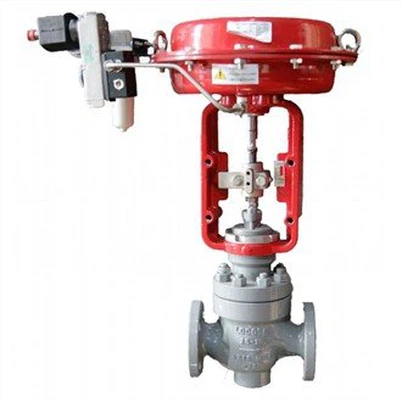
How does a pressure control valve work?
Leave a message
A pressure control valve is a device designed to regulate and control the pressure of a fluid (liquid or gas) within a system. It operates by adjusting the flow area within the valve, thereby controlling the rate at which the fluid can pass through and regulating the downstream pressure.
Here's a general overview of how a pressure control valve works:
Valve Components: A pressure control valve typically consists of a valve body, an inlet port where the fluid enters, an outlet port where the fluid exits, a movable element or trim (such as a disc, plug, or ball), and an actuator that controls the position of the movable element.
Pressure Sensing: The pressure control valve receives input from a pressure-sensing element, such as a pressure transmitter, located in the system. The pressure-sensing element continuously measures the downstream pressure and sends a signal to the actuator of the control valve.
Actuation: The actuator, which can be pneumatic, hydraulic, or electric, receives the pressure signal from the pressure-sensing element and adjusts the position of the movable element inside the valve. The actuator's purpose is to open or close the valve, or to position the valve at a specific position based on the pressure signal received.
Flow Control: As the movable element adjusts, it alters the flow area through the valve. When the valve is fully open, maximum flow can pass through, and the pressure drop across the valve is minimized. As the valve closes, the flow area decreases, causing an increase in pressure drop and a reduction in flow rate.
Pressure Regulation: The control valve continuously modulates its position based on the pressure signal it receives. If the downstream pressure is below the desired setpoint, the actuator adjusts the valve to open further, allowing more fluid to flow and increase the pressure. Conversely, if the downstream pressure exceeds the setpoint, the actuator adjusts the valve to close partially, reducing the flow and decreasing the pressure.
Feedback Loop: The pressure control valve operates as part of a closed-loop control system. The pressure-sensing element monitors the downstream pressure, sends a signal to the actuator, which adjusts the valve position accordingly. The process is iterative, with the control valve continuously modulating its position to maintain the desired pressure setpoint.
By modulating the flow area, the pressure control valve effectively regulates the fluid pressure within the system, compensating for fluctuations in demand, changes in process conditions, or disturbances in the system. The control valve's ability to modulate and maintain precise pressure control allows it to play a crucial role in various industrial processes and systems where pressure regulation is essential.