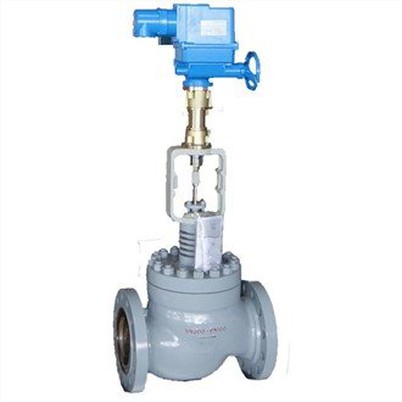
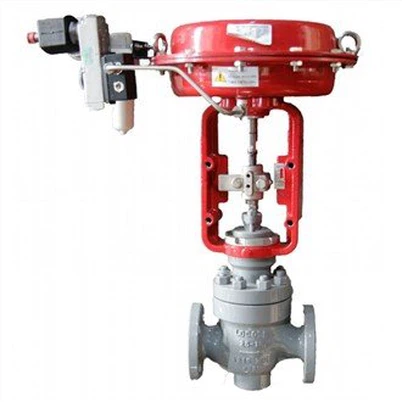
Debugging skills and precautions for different types of electric single-seat control valves
Leave a message
In the industrial field, pneumatic cryogenic control valves play an indispensable role, especially in those scenarios where the flow of cryogenic media needs to be precisely controlled. In recent years, with the continuous development of science and technology, many new cryogenic control valves have emerged. In addition to requiring high stability and reliability, these valves must also be able to operate normally under extreme low temperature conditions, which undoubtedly brings special challenges to their design and production. At present, there are many types of pneumatic cryogenic control valves in use on the market, but most of them adopt traditional mechanical valve core structure design, which cannot meet the harsh working conditions. This article will conduct an in-depth study on the operating mechanism and structural characteristics of pneumatic cryogenic control valves, aiming to provide valuable reference information for engineers and technical experts in related industries.
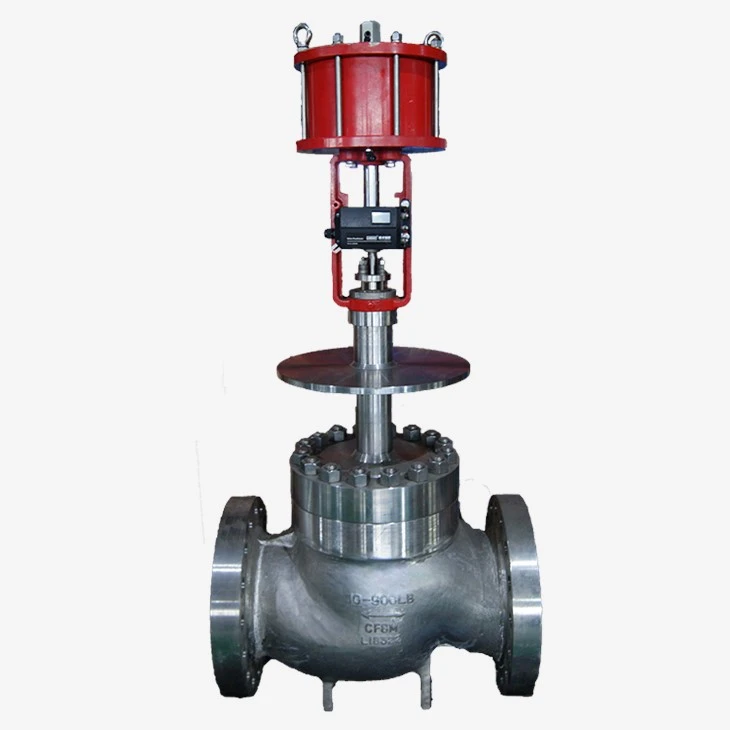
Specific working principle of pneumatic low-temperature regulating valve
Working principle
The pneumatic low-temperature regulating valve is mainly composed of key components such as pneumatic actuator, valve body, and valve core. Its working principle is based on the control of pneumatic signals, and the movement of the valve core is driven by the pneumatic actuator to achieve precise regulation of the medium flow.
Signal input and conversion
Usually, the control system will send out pneumatic signals, such as temperature sensors or pressure sensors. The pneumatic actuator is connected to the gas source through the gas path connected to it to control the gas flow direction and flow rate. This batch of sensors can detect the temperature and pressure of the medium in real time and convert these detected signals into electrical signals or air pressure signals. In this process, the system first collects gas concentration and pressure information through the external interface, and then analyzes and processes the obtained data. Then, this batch of signals is transmitted to the pneumatic actuator, and through the internal conversion mechanism, the air pressure signal is converted into mechanical action, that is, driving the movement of the valve core.
Flow regulation and feedback
The flow of the medium is directly affected by the specific position of the valve core. Since the pneumatic control valve is subject to greater external interference during operation, real-time monitoring is required to ensure its safe and stable operation. After receiving the control signal, the pneumatic actuator will adjust the opening degree of the valve core according to the strength and direction of the signal. Therefore, in the entire system, it is necessary to detect the actual displacement of the valve core in real time. In addition, in order to ensure the accuracy and stability of the adjustment process, the pneumatic low-temperature control valve is usually equipped with a feedback mechanism. By monitoring the actual position of the valve core and feeding this data back to the control system, accurate control of the flow can be achieved.
Structural features of pneumatic cryogenic regulating valve
Material selection
Under low temperature conditions, the properties of materials may change significantly, such as fragility to low temperatures and corrosion resistance. Since pneumatic cryogenic valves are a typical highly corrosive fluid medium, their use conditions are very harsh and require good sealing, corrosion resistance and high pressure resistance. Therefore, when selecting the materials of pneumatic cryogenic regulating valves, you must be extra careful. At present, some new valves for low temperature environments have been developed at home and abroad, such as metal bellows valves and ceramic valves. Common building materials include stainless steel, alloy steel, and special materials specially designed for low temperature conditions. At present, cryogenic valves mainly use two materials, stainless steel and alloy steel. This batch of materials not only has excellent mechanical properties, but also can maintain its chemical stability in low temperature environments.
Sealing structure
Under low temperature conditions, the performance of the seal needs to meet higher standards. Pneumatic cryogenic valves have the advantages of compact structure, strong reliability and long service life, but because their internal medium is gas, they cannot be effectively sealed, so they cannot be used in high temperature conditions. Under low temperature conditions, traditional sealing materials may lose their original elasticity, resulting in the failure of the sealing function. This article introduces a new type of pneumatic cryogenic valve core structure, which is a bellows seal and rubber ring annular seal combined sealing structure designed based on gas dynamics theory. Therefore, when designing a pneumatic cryogenic regulating valve, a specific sealing method is usually selected, such as metal-to-metal sealing or elastic sealing technology. This type of sealing structure can maintain excellent sealing effect in a low-temperature environment and ensure stable operation of the valve.
Connection and installation
Under low-temperature conditions, it is particularly important to choose a suitable connection method. When connecting different types of pipe materials, a suitable connection method is required. Common connection methods include flange connection and threaded connection. Among them, flange connection is the most widely used connection form. It can withstand large loads and can be reliably fixed with equipment of different specifications. These connection methods not only have excellent sealing characteristics, but also maintain stable connection strength in a low-temperature environment. Due to its unique advantages, pneumatic cryogenic valves have become one of the most important components of cryogenic valves. In addition, in order to facilitate installation and maintenance, pneumatic cryogenic regulating valves are usually equipped with standardized interfaces and accessories.
Temperature control system in pneumatic low-temperature regulating valve
Temperature detection
Temperature detection is regarded as a key link in the temperature control system of pneumatic low-temperature regulating valve. In practical applications, it is necessary to select appropriate sensors to measure and control the temperature of the medium according to the different controlled objects to ensure the normal operation of the valve. Common temperature sensors include thermal resistors and thermocouples. Traditionally, resistance wires are used as temperature sensing elements for temperature measurement. This batch of sensors has the ability to detect the temperature of the medium in real time and can convert these detected signals into electronic or air pressure signals. Since different types of sensors have the same response characteristics to the same measured object, the corresponding sensors can be selected for temperature detection according to actual conditions. Under low temperature conditions, when selecting a temperature sensor, special attention must be paid to key factors such as its measurement range, accuracy and stability.
Control logic
After proper processing, the temperature signal will be converted into a control signal. This batch of control signals is transmitted to the pneumatic actuator via the control system, thereby driving the valve core to move to adjust the flow rate of the medium. In practical applications, when the displacement of the valve core changes due to changes in ambient temperature and other factors, the valve core needs to be compensated accordingly to meet the system requirements. In order to achieve precise temperature management, the control system usually uses advanced control algorithms, such as PID control technology. This article introduces several common control algorithms based on fuzzy control technology and their applications. These calculation methods can adjust the intensity and direction of the control signal according to the real-time changes of the temperature signal, thereby achieving precise control of the temperature.
Actuator response
The rapidity and accuracy of the response of the pneumatic actuator are the core factors that determine the performance of the temperature control system. With the continuous deepening of the research on pneumatic systems, people are paying more and more attention to the dynamic characteristics of pneumatic actuators under high temperature conditions, especially the response ability under low temperature conditions. Under low temperature conditions, the response speed and accuracy of the actuator may be affected by changes in the physical properties of the medium, such as viscosity and density. At the same time, as the ambient temperature decreases, the system pressure will gradually decrease. Therefore, in the process of designing pneumatic low-temperature control valves, special attention must be paid to the various performance parameters of the actuator, such as travel time and positioning accuracy, to ensure that it can operate normally under low temperature conditions.
Types and characteristics of pneumatic actuators in pneumatic cryogenic regulating valves
Single-acting pneumatic actuators
Single-acting pneumatic actuators are widely considered to be a common type of pneumatic actuators. This article introduces a double-acting pneumatic actuator used in a high-temperature superconducting magnetic levitation system, which consists of two one-way valves and three cylinders. It has only one air chamber, and the movement of the valve core is achieved by the change of air pressure. When the controlled object is in a high temperature or high pressure state, this pneumatic actuator cannot work properly. Under low temperature conditions, a single pneumatic actuator shows its simple structure and easy maintenance. When the driven part leaks or deforms due to external force, the actuator can automatically return to its original position. However, since the valve core can only be driven in one direction, it is usually necessary to install a reset device such as a spring to ensure that the valve core can return to its original position in the event of loss of air pressure.
Double-acting pneumatic actuator
Compared with single-acting pneumatic actuators, double-acting pneumatic actuators have two independent air chambers, which can drive the valve core to move in the forward and reverse directions by adjusting the air pressure. Based on this design concept, a new dual-chamber bidirectional synchronous switching double-acting pneumatic actuator is proposed, and the structural design method of the new double-acting pneumatic actuator is given. This design structure gives the double-acting pneumatic actuator a higher level of control accuracy and rapid response. Using the pressure difference in the double air chamber as the power to achieve valve opening control is a new design concept. In addition, since the design does not rely on springs or other reset devices, its structure becomes more compact and easier to maintain. In addition, the double-acting pneumatic actuator also has good reliability and safety, which can effectively extend the service life and reduce the cost of use. Under lower temperature conditions, double-acting pneumatic actuators often show better adaptability and stability.
Other types of actuators
In addition to the single-acting or double-acting pneumatic actuators that can be selected, there are other types of pneumatic actuators, such as diaphragm type and piston type. Among them, the most common and widely used is the piston-cylinder type mechanism, including various forms of pneumatic actuators composed of pneumatic components and mechanical devices. These established actuators each have their own unique features and application fields. In the application, the appropriate actuator must be selected according to the actual situation to achieve the ideal control effect. For example, the diaphragm actuator is particularly suitable for applications with strict weight and volume requirements due to its simple structure and light weight; the piston actuator is particularly suitable for applications that need to carry larger loads due to its higher output capacity and stability. In addition, the actuator must also meet good sealing performance to avoid gas leakage or contamination, thereby improving the reliability and service life of the valve. Under low temperature conditions, choosing the right type of actuator is the key to ensuring the normal operation of the pneumatic low-temperature control valve.
Valve body structure design of pneumatic low-temperature regulating valve
Material adaptability
The performance and service life of pneumatic low-temperature regulating valves are largely affected by the selection of valve body materials. By analyzing the changes in the mechanical properties of valve body materials under different temperature conditions, some valuable conclusions are drawn, which provide a certain reference basis for practical applications. Under low temperature conditions, key parameters such as the thermal expansion characteristics and brittleness of materials against low temperatures may change. If improperly selected, it may cause valve failure or cause safety accidents. Therefore, in the process of selecting valve body materials, its adaptability under low temperature conditions must be highly valued. In order to ensure the normal operation of the valve, suitable materials must be selected to meet the requirements of the valve body structure under different temperature conditions. Common valve body materials include stainless steel, alloy steel, and some special materials designed specifically for low temperature environments. At present, special metal materials such as stainless steel and titanium alloys are widely used in the industrial field. This batch of materials not only has excellent mechanical properties, but also maintains its chemical stability in low temperature environments.
Thermal expansion compensation
Since the thermal expansion coefficient of the material may change under low temperature conditions, the thermal expansion compensation mechanism needs to be paid special attention to in the design of the valve body structure. In order to ensure the sealing performance between the valve core and the valve seat, the valve core and the valve seat must be subjected to a certain degree of thermal expansion compensation. Common mechanisms for thermal expansion compensation include bellows compensators and metal expansion plugs. By analyzing and comparing different forms of cold shrinkage compensation mechanisms, a more practical gap compensation mechanism between the valve stem and the valve seat is obtained. This set of compensation strategies can effectively reduce the thermal expansion of the valve body material under low temperature conditions and ensure that the valve can operate stably. In addition, in the process of valve body structure design, in order to prevent leakage problems caused by thermal expansion, the design and selection of the sealing structure should also receive special attention.
Sealing and leak prevention
In low temperature environments, sealing performance faces more severe tests. Pneumatic cryogenic valves are a new type of high temperature valve with the characteristics of high temperature resistance, high pressure and low leakage rate, which can meet the application requirements in some harsh environments. In low temperature environments, traditional sealing materials may lose their original elasticity or become hard, resulting in the failure of the sealing function. In recent years, some new types of cryogenic seals have been developed. Therefore, in terms of sealing design, pneumatic cryogenic regulating valves require the use of specific designs and materials. In addition, due to the certain temperature distribution in the valve body, it is necessary to use thermosetting resin-based composite materials as fillers for sealing design. For example, we can choose to use metal-to-metal sealing or elastic sealing materials. In addition, due to the large temperature gradient in the valve body, the medium in the valve cavity has a certain flow resistance. This type of sealing structure can maintain an excellent sealing effect in a low temperature environment and ensure that the valve can operate stably. At the same time, in the stage of valve body structure design, in order to prevent safety hazards or environmental pollution caused by leakage, special attention should be paid to the implementation of leakage prevention measures.