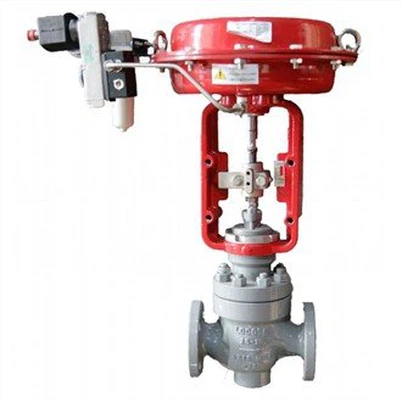
Analysis of the causes of inaccurate positioning of electric single-seat control valves and debugging methods
Leave a message
In industrial control systems, electric single-seat control valves are regarded as core components. They are widely used to adjust and control key parameters such as flow, pressure and temperature of liquids, gases and other media. Electric single-seat valves are precision mechanical valves composed of valve bodies and dynamic sealing devices. The positioning accuracy of the system directly affects the robustness and efficiency of its operation, which is crucial to ensuring the continuity of the production process and the quality of the final product. Due to the harsh working environment of electric single-seat control valves, high positioning accuracy is required. However, in real usage scenarios, positioning errors of electric single-seat control valves often occur, which not only reduces the control accuracy of the system, but also may lead to potential safety risks. At the same time, due to the nonlinear characteristics of the valve itself to a certain extent, it is also very difficult to accurately adjust the control valve. Therefore, in-depth analysis of the root causes of inaccurate positioning of electric single-seat control valves and finding effective debugging strategies are of vital significance to improving the overall performance of industrial control systems.

Analysis of the main reasons for inaccurate positioning of electric single-seat regulating valves
Common problems of inaccurate positioning of electric single-seat regulating valves include the inconsistency between the valve opening and actual demand, large fluctuations in the control signal, and unstable positioning. There are many reasons for this situation, including defects in the actuator itself and installation quality problems, as well as other reasons, such as medium characteristics, operating conditions, and external environment. These situations may be triggered by the following key factors:
Electrical system problems:
- Signal interference: Due to electromagnetic interference or aging of the line, the control signal may be distorted, which will have an adverse effect on the accuracy of positioning.
- Unstable power supply: Fluctuation or instability of the power supply voltage may cause abnormal operation of the actuator, thereby affecting the positioning effect.
Mechanical system problems:
- Valve stem wear problem: During long-term use, the friction between the valve stem and the valve seat causes wear, which further affects the accurate control of the valve opening.
- Aging of the valve seat: Due to the aging or corrosion of the valve seat material, its sealing effect may be reduced, which will have an adverse effect on the positioning accuracy of the valve.
Improper parameter settings of controller and actuator:
- Inconsistent parameters: Since the parameter configuration of the controller and actuator is not properly adjusted according to actual needs, this may cause inaccuracy in positioning.
- Failure of feedback mechanism: Due to the failure or improper setting of the feedback sensor, it cannot accurately display the actual position of the valve, which further affects the accuracy of positioning.
External environmental factors:
- Fluctuations in temperature and humidity: Extreme environmental factors may degrade the performance of electrical components and cause deformation of mechanical parts, which will have an adverse effect on the accuracy of positioning.
-

Identification and diagnosis methods of electrical faults
In the electric single-seat regulating valve positioning system, accurately identifying and diagnosing electrical faults is the core factor to ensure the stable operation of the system. In actual work, it is necessary to analyze and judge different electrical faults, so as to take targeted measures to eliminate them. Common types of electrical faults include signal transmission problems, abnormal power supply voltage, and damage to internal components. After analyzing the causes of their occurrence, corresponding elimination methods and measures are proposed. The following are the specific steps for troubleshooting
1. Check the signal transmission quality: Use an oscilloscope or signal generator to detect the waveform and amplitude of the control signal to ensure that the signal transmission is correct.
2. Test the stability of the power supply voltage: Use a multimeter to measure the power supply voltage to ensure that it fluctuates within the specified range.
3. Use instruments to detect the electrical performance of internal components: Use professional instruments to detect the performance of internal resistors, capacitors, transistors and other components to troubleshoot the fault point.
4. Record and analyze fault data: Record various parameters when the fault occurs, and quickly determine the problem of the electrical system through data analysis.

The influence of mechanical component wear or damage on positioning accuracy
The positioning accuracy of electric single-seat control valve is directly affected by the wear or damage of mechanical components. The valve core and valve body are the most important and most vulnerable parts of the actuator. The wear of the valve stem and valve seat may affect the valve opening control, while the damage of the seal may cause leakage, thereby reducing the control accuracy. The damage of the valve seat is mainly manifested in the wear and tear of the sealing groove and the damage of the thread. The valve stem may cause positioning errors due to stagnation or wear, so that the system cannot respond accurately to the control signal. Damage to the valve core assembly will also cause the actuator to jitter, resulting in a decrease in regulation accuracy or even failure, which seriously affects the normal operation of the control system. Therefore, in order to ensure the positioning accuracy of the control valve, it is crucial to regularly maintain and replace the worn parts.
Positioning parameter adjustment method of electric single-seat control valve
During the debugging process, adjusting the positioning parameters of the electric single-seat control valve is the key to ensure its accuracy. Specific methods include:
1. Adjust the gain, offset and other parameters of the positioner: According to actual needs, adjust the gain and offset of the positioner to match the output signal with the control signal.
2. Adjust the response time and control range based on actual working conditions: According to system characteristics and working conditions, adjust the response time and control range to improve positioning accuracy and stability.
3. Set up a feedback mechanism to correct positioning errors in real time: Introduce feedback sensors to monitor the valve position in real time and perform real-time corrections through the controller.
4. Use test equipment to verify positioning accuracy: Use special test equipment to verify the positioning accuracy of the control valve to ensure the debugging effect.
Debugging skills and precautions for different types of electric single-seat control valves
When debugging different types of electric single-seat control valves, there are some specific operating skills and details that need to be paid attention to. For intelligent electric single-seat control valves, they have the characteristics of high intelligence and large adjustment range, so they have high requirements for equipment. In terms of debugging, ordinary electric single-seat control valves are different from intelligent electric control valves: the former focuses more on the adjustment of mechanical components and the matching of electrical signals, while the latter focuses more on the configuration of software parameters and the adjustment of communication protocols. By analyzing the characteristics and applicable conditions of the two types of control valves, specific debugging methods and processes are proposed. When debugging, we must attach great importance to each step of safe operation to prevent accidents caused by misoperation. At the same time, the setting of key technical parameters such as valve core installation position and valve stem angle must meet the requirements of the specifications to avoid safety accidents. In addition, the key points of debugging of different types of valves in various environments are different, and corresponding adjustments need to be made according to the actual situation. For different types of valves, their characteristics and requirements are different, and corresponding preparations need to be made in a targeted manner. Various brands and models of control valves have their own unique properties and commissioning recommendations. Therefore, commissioning personnel need to have a deep understanding and strictly follow the relevant instructions.