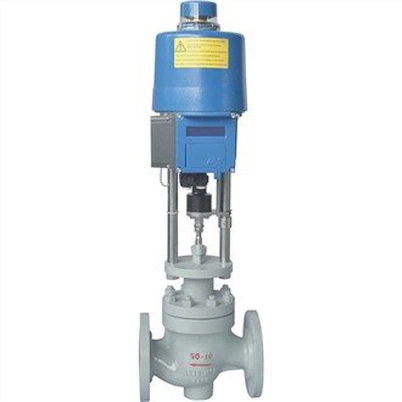
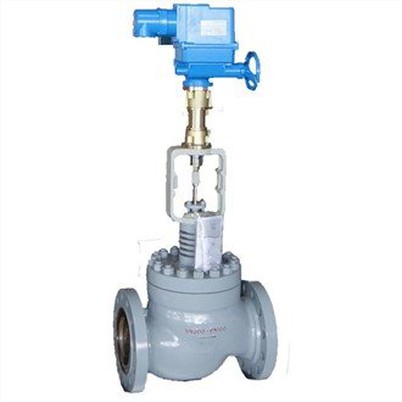
What are the uses and characteristics of pneumatic control valves?
Leave a message
1. Pneumatic control valve is a right-angle rotary structure, which can be used with valve positioner to realize proportional adjustment; V-shaped valve core is most suitable for various adjustment occasions, with large rated flow coefficient, large adjustable ratio, and sealing effect. Good, sensitive adjustment performance, small size, can be installed vertically. Suitable for controlling gas, steam, liquid and other media.
2. Features of pneumatic control valve: The pneumatic control valve is simple in control, fast in response, and intrinsically safe, and no additional explosion-proof measures are required. Pneumatic regulating valve is a quarter-turn structure, consisting of a V-shaped valve body, a pneumatic actuator, a positioner and other accessories; it has an inherent flow characteristic of approximately equal percentage; it adopts a double-bearing structure, with low starting torque and excellent performance. Sensitivity and induction speed; super shearing ability.
3. The pneumatic piston actuator uses compressed air as the power source, and drives the crank arm to rotate 90 degrees through the movement of the piston to automatically open and close the valve. Its components are: adjusting bolt, actuator box, crank arm, cylinder block, cylinder shaft, piston, connecting rod, universal shaft.
4. The working principle of the pneumatic control valve: the pneumatic control valve is composed of an actuator and a regulating mechanism. The actuator is the thrust component of the regulating valve, which generates corresponding thrust according to the size of the control signal pressure, and pushes the regulating mechanism to act. The valve body is the regulating part of the pneumatic regulating valve, which is in direct contact with the regulating medium to regulate the flow of the fluid.