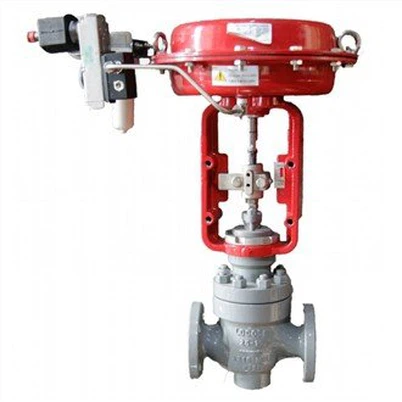
Performance Challenges and Solutions of Pneumatic Cryogenic Control Valves in Cryogenic Environments
Leave a message
In industrial control systems, pneumatic cryogenic control valves are a key component, which are widely used in many fields such as liquefied natural gas, cryogenic chemicals and frozen storage. With the improvement of the automation level of industrial production processes, the demand for cryogenic valves is increasing. Under low temperature conditions, the performance stability and reliability of the system have a direct impact on the safety and work efficiency of the entire production process. At present, there are no relevant products or standards in China to conduct experimental research and on-site application guidance on pneumatic cryogenic control valves. Therefore, it is necessary to explore the thermal fatigue life assessment technology of pneumatic cryogenic control valves under actual operating conditions. This article will conduct an in-depth analysis of the performance problems that pneumatic cryogenic control valves may encounter under low temperature conditions, and provide targeted solutions.
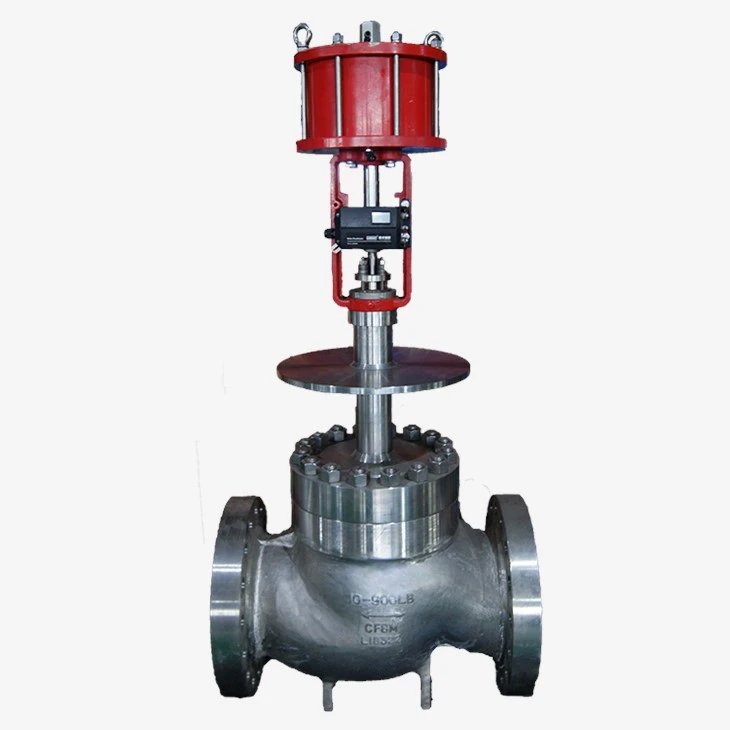
What specific performance challenges may pneumatic cryogenic control valves face in cryogenic environments?
- Low temperature environment will affect the properties of materials: under very low temperature conditions, the brittleness of materials will increase significantly, making them more likely to break or fail completely. At present, some domestic valve products have been found to have a large number of valves damaged during use due to failure to meet design requirements. This situation will not only weaken the overall stability of the valve, but may also lead to potential safety problems such as leakage.
- Weakened sealing ability: under low temperature conditions, the sealing material will become harder and less elastic, thus affecting the sealing effect. Under high temperature or high pressure conditions, due to the adsorption of gas molecules on the sealing surface, it will creep and cause air leakage. This situation may have an adverse effect on the adjustment accuracy and sealing effect of the valve, and may even cause leakage of the medium in extreme cases.
- The flow characteristics of the fluid have changed: under low temperature conditions, the fluidity of the medium is poor and the viscosity increases, which may affect the flow properties and adjustment accuracy of the control valve.
- The response speed of the actuator is slowed down: due to the influence of low temperature, the performance of pneumatic components (such as cylinders, gas-controlled valves, etc.) will be reduced, and the response speed will also be slowed down, thus affecting the adjustment speed and accuracy of the valve.
How does the low temperature environment affect the material selection and sealing performance of the pneumatic low temperature regulating valve?
Under low temperature conditions, the material selection and sealing effect of the pneumatic low temperature regulating valve are particularly critical. This article discusses the selection principles of valve materials in low temperature environments. The materials used must have excellent toughness, brittleness resistance and corrosion resistance to ensure that they can work normally under extremely low temperature conditions. In addition, a sufficiently large specific heat capacity and a good thermal expansion coefficient should be guaranteed. Due to their excellent low temperature properties, specific alloys and composite materials have been widely used. Therefore, how to choose the right material in a low temperature environment is a key. In addition, we also need to further improve the sealing design, such as adopting metal-to-metal sealing methods, elastic sealing technology, etc., to enhance its sealing effect. Therefore, it is necessary to study the effects of different types of materials and their combinations on low temperature sealing and service life. When selecting sealing materials, their elasticity and wear resistance in low temperature environments must be fully considered to ensure good sealing performance.
What are the effective solutions for the freezing problem of pneumatic low-temperature regulating valves at low temperatures?
- In order to solve the freezing problem of pneumatic low-temperature regulating valves at low temperatures, the following measures can be taken:
- Heating method: Use heating components or equipment with heat belts to heat the valve body to ensure that its temperature is maintained in a specific range to avoid freezing of the medium.
- In terms of insulation design, we use insulation materials to wrap the valve body to reduce heat loss and enhance the insulation effect of the valve.
- Fluid preheating refers to the appropriate preheating of the low-temperature environment to enhance its flow characteristics and reduce the possibility of freezing.
When designing and operating a pneumatic low-temperature regulating valve, how can it be optimized to adapt to the special requirements of a low-temperature environment?
When designing and operating a pneumatic low-temperature regulating valve, the following optimization measures should be considered:
- Optimization in design: The brittle material that can withstand low temperatures is selected, and the valve body structure is improved to enhance the overall strength and stability of the valve. Under the premise of ensuring the sealing requirements, the surface roughness of the valve body is minimized. At the same time, we have optimized the seal design to enhance its sealing effect and avoid leakage of the medium.
- Operation and maintenance: Periodically inspect and maintain the valve to ensure that it can work properly. Perform regular tests or repairs to check whether the valve core is intact and whether there is leakage in the valve stem, valve body and seal. By using a remote monitoring and diagnostic system, we can identify and deal with problems in a timely manner, thereby enhancing the stability and safety of the valve.
What technical innovations or improvements can improve the stability and durability of pneumatic low-temperature control valves in low-temperature environments?
In order to improve the stability and durability of pneumatic low-temperature control valves in low-temperature environments, the following technical innovations and improvement measures can be taken:
- About the use of new materials: We are committed to developing new low-temperature materials, such as low-temperature alloys and composite materials, to enhance the overall performance of valves and their adaptability at low temperatures.
- In the intelligent control system, we use advanced intelligent control algorithms to enhance the adjustment accuracy and responsiveness of valves, thereby achieving more precise flow management.
- Advanced manufacturing technology: By adopting sophisticated manufacturing and processing methods, we can improve the production quality and accuracy of valves while reducing the possibility of failure.
- Modular design concept: This design approach makes maintenance and replacement simpler, thereby reducing the total cost of maintenance and enhancing the maintainability of valves.