How to select the right pneumatic cryogenic control valve to meet specific application requirements?
Leave a message
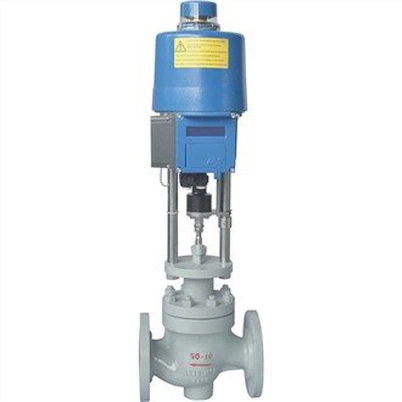
Pneumatic pneumatic cryogenic control valves central to cryogenic cryogenic industrial scenarios such as liquefied natural gas (LNG) reception terminals, cryoethylene cracking devices and medical liquid nitrogen storage systems. The quality of their selection directly affects the stability of the process and the safety of the equipment. The selection methodology of pneumatic cryogenic control valves is expounded in this paper based on industry practice and engineering example, which can be used as a technical reference for engineers in energy, chemical and medical industries.
Unique Challenges challenges in Cryogenic Scenarios and core Selection Principles
Cryogenic media (such as liquid oxygen, liquid nitrogen and liquefied natural gas) exhibit three key characteristics. First, low-temperature brittleness causes material ductility to plummet, and conventional carbon steel is prone to brittle fractures below -46°C. Secondly, cold contraction effects results in structural deformation requiring clearance compensation of 0.1-0.3mm between valve stem and body. Third, media flashing will produce gas-liquid two-phase flow, resulting in serious wear and tear of valve trim. These characteristics dictate three core selection principles:
- Material Ductility Matching: Valve body material must pass the low temperature shock test of -196 ° C, and 304L/ 316L stainless steel becomes the dominant material for deep cryogenic applications.
- Cold Loss Design: Extended rods ≥250mm in length insulate the actuator from cryogenic zones, while insulating sleeve minimizes heat loss.
- Erosion-Resistant Sealing Solutions: Metal to metal hard seal suitable for high pressure differential pressure applications, soft sealing (PTFE/perfluoroelastomer) suitable for clean media with leakage rates ≤ 1 × 10 -6 MPa · m3/s.
Technical Selection Pathway: A 7-Step Precision Decision Model
1.Cryogenic Grade and Media Compatibility Analysis
Cryogenic scenarios is divided into three categories according to temperature ranges:
Low to medium temperature (-46°C to -40°C): suitable for low temperature carbon steel (LCB) such as control valves for liquid propane storage tanks. A petrochemical project case demonstrated that LCB valve bodies operated continuously at -42°C for three years without brittle fracture.
Deep Cryogenic (-196°C to -46°C): 304L/ 316L stainless steel required. In a LNG terminal project, the 316-litre valve experienced a pressure difference of -162°C and 0.8 MPa while maintaining ±0.5% regulation accuracy.
Ultra-Low Temperature (<-196°C): special materials demanded for aerospace propellant control systems, such as Inconel 718.
Key Parameters: Material cryogenic shock energy must ≥ 27J (-196°C) and valve body grain size ≤ 6 grade.
2.Flow Characteristic and Process Matching
Flow Feature Selection Consistent with process dynamics:
Linear Characteristic: Applicable to liquid level control system, such as liquid nitrogen storage level adjustment. A medical cryogenic equipment case uses linear valves to reduce the fluctuation of the liquid level to ±2mm.
Equal Percentage Characteristic: Suitable for pressure regulation scenarios such as LNG vaporization station pressure control. When the same proportion of valves are opened 10, the change rate of flow only 10%, effectively suppressing pressure fluctuations.
Quick-Opening Characteristic: emergency shutdown systems for response times ≤3 seconds.
Calculation Method: Determine valve size via Cv value formula:
Cv=ΔPQρ
Where Q represents actual flow rate (m³/h), ρ denotes media density (kg/m³), and ΔP indicates pressure differential (MPa). For example, a DN50 valve under LNG conditions (ρ=425kg/m³, ΔP=0.5MPa) calculates to Cv≈32, requiring a standard Cv=32 valve.
3.Actuator Power Matching and Response Optimization
Actuator selection takes into account three key factors:
- Thrust Calculation: total force = maximum valve balance + friction force. For example, a a DN100 valve under 2 MPa differential produces an 4,500N unbalanced force and necessitates a piston actuator (output force range: 3,000-8,000N).
- Response time: Diaphragm actuators within ≤8 seconds, piston types within 5 seconds. The LNG refueling station rapid loading system uses piston actuators to reduce loading time by 40%.
- Protective rating: IP67 protection is required for outdoor facilities and Ex d IIB T4 Ga certification is required for blast protection. Production on a chemical project was halted for 12 hours after the IP65 valve failed in heavy rain.
4.Adaptation of Sealing Structure and Media Cleanliness Adaptation
Sealing solutions is consistent with media properties:
- Clean media: Soft sealing + nickel-based alloy overlay valve seats, achieve zero leakage of medical liquid nitrogen systems.
- Particle-Containing Media: Hard sealing + scraper valve rack, such as seat wear less than 0.05 mm/ year in LNG high voltage transmission lines.
- High-Viscosity Media: Streamlined valve trim (equivalent flow diameter ≥3× nominal diameter) prevent media retention in cryogenic lubricant regulation systems.
5. Specification for Cold Contraction Compensation and installation
Cold contraction design focuses on:
- Stem Clearance: Calculate compensation using L= α · L · T (α: linear expansion coefficient, L: stem length, T: temperature variation). For example, a 316-litre stem from -196°C to 20°C requires compensation of 0.36mm per 100mm length.
- Installation Orientation: Valves shall be installed vertically ≤ 5° inclination to prevent trim jamming. A LNG project suffered a regulatory failure three months later due to a valve inclination of 15 °.
- Insulation Connection: Vacuum insulation sheath shall have a thermal conductivity ≤0.003W/ (m·K) and heat loss ≤2W/m.
6.Safety Standards and Certification Systems
Three main proofs require to be provided:
- Pressure Equipment Directive: PED 2014/68/EU compliant, design pressure ≥1.5× nominal pressure.
- Explosion-Proof Certification: ATEX or IECEX explosion-proof atmospheric certification (e.g., LNG stations).
- Low temperature test: Seal and impact test at -196°C, including material composition analysis curves.
7.Total Life Cycle Cost Optimization
Selection balances initial investment and operating costs:
- Procurement Cost: 316L valves Price: 1.8× LCB valves but Offer 3 × Longer Service Life.
- Maintenance costs: hard-sealed valves require to be maintained every 2 years and soft-sealed valves need to be seal replacements annually.
- Energy efficiency: Insulation jackets can reduce heat loss by 15% and save about $8,000 a year in LNG station energy costs.
Typical Application Case Study and Selection Analysis
Case 1: LNG terminal tank export control valve
- Operating conditions: Medium: liquefied natural gas (-162°C); Pressure: 0.6 MPa; Flow rate: 200 m3/h
- Selection Solution:
Body: 316L stainless steel, PN10.0 MPa
Execution: Piston type, 6,000N output force
Seal: Hard sealing + Inconel 625 overlay
- Features: Equal percentage, Cv=100
Case 2: Medical Liquid Nitrogen Cryotherapy Equipment
- Operating conditions: medium: liquid nitrogen (-196°C); Pressure: 0.1 MPa; Flow rate: 5 m3/h
- Selection Solution:
Body: 304L stainless steel, PN2.5 MPa
Implementing agency: Diaphragm type, 800N output force
Seal: Soft sealing (PTFE)
Features: Linear, Cv=0.8
Protection: IP67
Performance: Liquid nitrogen flow fluctuates ≤±0.1 m3/h, meeting medical precision requirements.
Protection: IP67 + Ex d IIB T4
- Performance: Adjustable accuracy of ±0.8% for 5 consecutive years.
INTRODUCTION Future Technology Trends and options
As cryogenic industries moves towards ultra-low temperatures (-253°C liquid hydrogen) and intelligences, factors to consider when selecting include:
- Material Innovation: Research on liquid hydrogen ceramic matrix composites.
- Intelligent control: Integrated IoT sensor for predictive maintenance.
- Modular Design: Standardized interfaces that can be replaced quickly to reduce downtime.
The selection of pneumatic cryogenic control valves represents the interdisciplinary application of materials science, fluid mechanics and control engineering. By establishing a seven-step decision-making model and analyzing typical application cases, engineers can systematically solve selection problems in low temperature environment and provide technical guarantee for safe and efficient industrial operation.