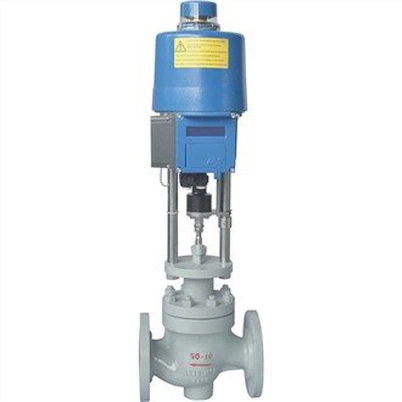
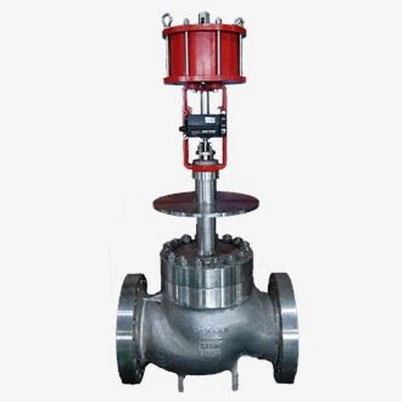
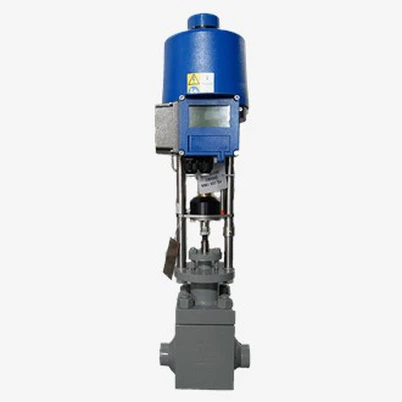
How to handle the situation where the limit switch does not stop moving after a single-seat regulating valve is fully open or fully closed.
Leave a message
Solution to the Issue of continuous starting of a limited-position switch with a single seat control valve open or closed
As an indispensable key part of industrial automation control systems, single seat control valves plays an important role in ensuring the smooth and safe operation of production process. However, in practical applications, sometimes the limit switch will keep to work even after the single seat control valve has been fully opened or closed. This not only affects the normal operation of the control valve, but also may pose a threat to production safety. In this paper, the causes of this problem will be discussed in depth, and corresponding solutions will be put forward.
I. Analysis of Causes
When a single seat control valve is fully open or closed, the problem of the limiter switch continuing to operate is usually caused by the following factors:
The control module is the the "brain"of the control valve that receives control signals and drives the actuator. If the function selector switch is in the wrong position, the control module may not recognize the limit signal correctly and stop the actuator's movement time.
Improper adjustment the "Zero Position" and "stroke" potentiometers: Potentiometers are key components used to set control valve zero and stroke. If the "zero position" and "Trip" potentiometers are improperly tuned, the control module may not receive the correct feedback signal when the valve reaches the set position, preventing the the actuator's movement.
the Limit Switch or Its Wiring fault: limit switch is a key part to detect the position of actuator in control valve. If the limit switch itself is damaged or the circuit fails, the control module may not receive the limit signal, causing the limit switch to continue to be activated.
Damage to or blockage of the Internal Transmission Parts of the Actuator: The actuator is responsible for driving the core of the actuator through the control valve. If the actuator's internal transmission parts is damaged or jammed, the actuator may not be able to stop properly at the set position, triggering continuous activation of the limit switch.
Excessive Fluid Pressure Variation or Insufficient Actuator Thrust: In the case of excessive fluid pressure variation or insufficient actuator thrust, the control valve may not be able to maintain a stable position, resulting in continuous activation of the limit switch.
Improper Selection of control valve or frequent operation of Small Openings: if control valve selection is improper or frequent operation of small openings, it may lead to instability in operation process, causing the limited-position switch to start continuously.
ii. Solutions
The following solutions can be used to solve the problem of continuous starting of a limited-position switch after a single-seat control valve is fully opened or closed:
1. Check and adjust the Function Selection switch on the control module
First, check that the function selection switch on the control module is set correctly. If the position is found to be incorrect, adjust to the correct position immediately and re-test the control valve's operation.
2. Adjusting "the"Zero Position"and" stroke"potentiometers
Next, inspect the alignment of the zero potential and stroke potentiometers. If the adjustment is detected to be inappropriate, use appropriate tools to fine-tune it to ensure that the control module receives the correct feedback signal when the valve reaches the setting. During the adjustment process, the the control valve's operation closely observed to ensure that the adjusted parameters conform to the actual requirements.
3. Check and Replace the Limit Switch or Its Wiring
If you suspect that a limit switch or its wiring is malfunctioning, test it a multimeter or other tools. If damage to the limiter switch or circuit opening, short circuit or other problems are found, the limit switch should be replaced immediately or wiring fault repaired. After replacement or repair, re-test the control valve's operation to ensure that the problem is resolved.
4. Inspection and maintenance of internal transmission parts of the Actuator
If the actuator internal transmission parts are suspected to be damaged or jammed, remove the actuator for inspection. In the course of inspection, the wear and tear, lubrication and foreign interference of transmission parts should be carefully observed. If damaged or blocked parts are found, they should be repaired or replaced immediately. After repair or replacement, reinstall and test the the actuator to ensure its proper operation.
V. Adjust Fluid Pressure or replace actuators
If the fluid pressure variation too much or insufficient actuator thrust is insufficient, consider adjusting the fluid pressure or replacing the actuator. When adjusting fluid pressure, its stability and suitability should be maintained so as not to cause excessive influence on the control valve. When the actuator is replaced, a model and specification matching the original actuator shall be selected to ensure its proper operation and coordination with other parts of the control valve.
6. Re-select or adjust the operating openness of the control valve
If it is due to improper choice of control valve or frequent operation of small holes, you may consider re-selecting the control valve or adjusting its operating opening. In the case of re-selection, the appropriate control valve model and specification shall be selected according to actual requirements to ensure that it meets the production process's needs. When adjusting the operating opening, set it in the appropriate range according to actual situation, so as to avoid instability caused by frequent operation of small opening.
III. Preventive Measures and Routine Maintenance
The following precautions and routine maintenance measures should be taken to effectively prevent the continuous operation of a limited-position switch after the full opening or closing of a single-seat control valve:
Periodic inspection and maintenance: control valve are inspected and maintained regularly, including the operation of key components such as control modules, potentiometers, limit switches and actuators. Identify and resolve potential problems in a timely manner.
2. Keep clean and lubricated: Keep control valve and its surroundings clean and prevent dust, dirt and other impurities from entering the control valve and affecting its normal operation. Regularly lubricate the transmission parts the control valve to ensure its flexible movement.
1. Reasonable adjustment parameters: adjust the control valve's zero position, stroke, sensitivity and so on according to actual requirement, and ensure its stable operation in the set position.
3. Strengthen training education: Train and educate operators to improve their knowledge and proficiency in the working principle, operating methods and troubleshooting of control valves. Make sure they operate and maintain the control valves correctly.