Remote control and automation applications of high-pressure control valves
Leave a message
In the field of industrial automation, high voltage control valve is key equipment to ensure the steady operation of production process. Their performance directly affects the efficiency, safety and service life of the system. With the rapid development of Internet of Things (IoT), big data, artificial intelligence (AI) and other technologies, remote control and automation applications of high-voltage control valves have become an important trend in industry development, providing strong support to improve production efficiency, reduce costs, and ensure safety.
Overview of High-Pressure Control Valves
High-pressure control valves are typically valves with a nominal pressure greater than 100 MPa that regulate parameters such as fluid flow and pressure. They can control all types of liquids, including gases, liquids and vapours, to meet the special requirements of high-pressure environments. Widely used in petroleum, chemical engineering, metallurgy, power generation, water treatment, water supply and drainage, nuclear industry, aerospace and many other fields.
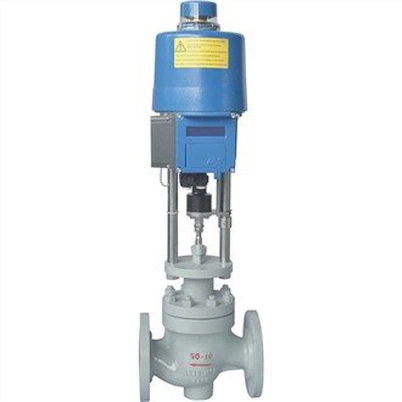
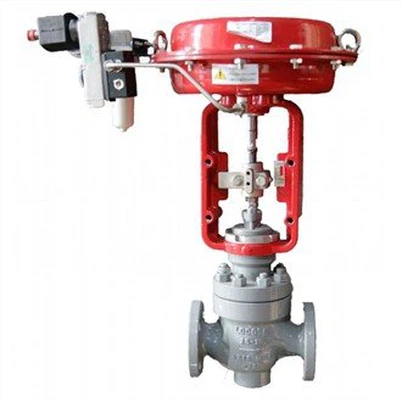
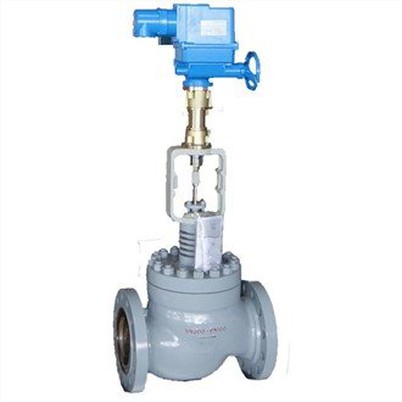
Commonly used types of high voltage control valve mainly include UHV electric control valves and pneumatic ultra-high-pressure control valves. Ultra-high voltage electric control valves adopts electric actuators control the movement of the valve core and realize flow regulation. It has characteristics of high control accuracy, high reliability and convenient operation. Pneumatic ultra-high-pressure control valves is powered by compressed air and the air cylinders is used as actuator to drive the valve for flow regulation. It is characterized by high response speed, high control precision and stable pressure.
Composition of remote control and automation systems
Sensors
Sensors are the "eyes" of remote control and automation systems that monitor the status of high-voltage control valves in real time, including key parameters such as position, flow, pressure and temperature. In petrochemical production, pressure sensors can accurately monitor pressure change of pipeline media. When the pressure exceeds a safe range, they promptly transmit the data to the control system to inform future control decisions. Flow sensor can measure the flow rate of fluid in real time and ensure accurate proportion of materials in the production process. These sensors convert the collected data into electrical signals and transmit them to the control system, providing basic information for remote control and automatic regulation.
Executing Agency
The actuator is the ``hand"of remote control and automation systems, which carries out the opening, closing and adjusting of the high voltage control valve according to control instruction. For electric high voltage control valve, their actuators is usually driven by an electric motor. Through gear or worm gear and worm transmission mechanism, valve opening and closing and adjustment. The motor receives electrical signals from the control system and rotates, reverses or stops operations as directed, driving the valve core and changing the opening to control fluid flow and pressure. The actuators of pneumatic high-pressure control valves uses air cylinders as the power source and uses compressed air to push valve core to move, complete the task of opening, closing and adjusting valve.
Control Systems
control system are the "brain" of remote control and automation systems. It is responsible for receiving sensor data and generating control signals based on preset control algorithms to achieve precise control of the actuator. control system are usually composed of hardware and software. Programmable Logic Controllers (PLC), computer and other hardware parts have strong data processing and logical control capabilities. They can react quickly to signals from sensors and make judgments and decisions based on preset programs. The software component includes control procedures and monitoring interfaces. According to different process requirements and control strategies, corresponding control procedures have been developed to realize automatic control of high voltage control valve. The monitoring interfaces displays the valve's operation status and parameter change in a visual manner, so that the operator can monitor and operate the valve in real time.
Network connectivity and Communication Modules
Network connection and communication module are key links to realize remote control. By connecting high voltage control valve to the Internet or LAN, operators can control the valve remotely through mobile applications or PC clients. Common means of communication are wired and wireless. Wired communication such as Ethernet communication has the characteristics of fast transmission speed and high stability and is suitable for high data transmission requirements. Wireless communications such as Wi-Fi, Bluetooth, LoRa and NB-IoT do not require wired networks and are more flexible and convenient for long distances and difficult wiring. The communication module is responsible for transmitting the control signal generated by the control control system to the actuators and transmitting the feedback information from the actuators back to the control system to realize two-way communication.
Advantages of remote control and automation applications
Improving Production Efficiency
Remote control and automation technologies can realize accurate control and real-time monitoring of high voltage control valve and reduce the possibility of human intervention and misoperation. In chemical production, the automatic control system can automatically adjust the opening of high voltage control valve according to real-time parameters in the production process, and ensure that the pressure and temperature of the reaction kettle remain in the optimal range, so as to improve product quality and output. At the same time, the remote control function enables the operator to monitor the valve's operation status through the control room or mobile terminal at any time, without the need for field operation, which greatly saves time and labor cost and improves production efficiency.
Cost reduction
On the one hand, remote control and automation management can reduce labor input and labor costs. In some large industrial enterprises, traditional high voltage control valve operation requires a large number of personnel to carry out on-site inspection and operation. With the use of remote control and automation technologies, the control room only needs a small number of operators to monitor and manage, greatly reducing the demand for labor. On the other hand, automation management can detect and deal with anomalies in a timely manner and avoid production interruptions and losses due to equipment failures. For example, sensors monitor the valve's operation in real time, and if a valve leakage or blockage is detected, the system can immediately warn of the problem and take appropriate measures, such as automatically closing the valve and switching to a backup valve, thus reducing production losses and maintenance costs of equipment failures.
Enhancing Safety
It is dangerous to operate high pressure control valve in high pressure environment. Remote control and automation technologies can monitor the operation status of high voltage control valve in real time, and if any abnormality is detected, early warning is issued and corresponding measures are taken to ensure the safety and stability of the production process. For example, in the process of oil extraction, the ring pressure of high-pressure gas wells needs to be strictly controlled. If the pressure is too high, it may damage wellhead equipment or even cause a safety accidents. The annular pressure can be monitored in real time by installing pressure sensors and automatic control system. When the pressure exceeds the preset value, the system automatically controls the electric globe valve to open the pressure release and ensure the safe operation of the gas well. At the same time, the remote control function enables the operator to operate the valve from a safe distance, avoiding direct contact with the high-pressure environment and effectively protecting the safety of personnel.
Implement intelligent management.
With the development of IoT technology, the remote control and automation applications of high voltage control valve is gradually developing in the direction of intelligence. The high voltage control valve combines sensor, actuator and intelligent control system, which can be intelligently adjusted according to real-time data to meet the complex and changeable production environments. For example, in some smart factories, high-voltage control valves can be networked and communicated with other production equipment for data sharing and co-control. Intelligent control system can automatically adjust valve opening and operation parameters according to production plan and quality requirements, optimize production process, improve production efficiency and product quality. At the same time, through the analysis and excavation of historical data, the valve can also be predictive maintenance, early detection of potential faults, timely maintenance, and extension of valve service life.
Application Case Analysis
Petroleum and Chemical Industry
In petroleum and chemical production, high pressure control valve is widely used in crude oil transportation, catalyst addition and product separation. Take a large oil refinery, for example. Refinery adopted remote control intelligent high voltage regulator to precisely control the pressure in the reaction kettle. By installing pressure sensors on the reaction kettle, the pressure change inside the reaction kettle is monitored in real time and the data is transmitted to the control system. The control system generates control signal according to a preset pressure control algorithm and transmits it to the actuator of the electric regulating valve, which automatically adjusts the valve opening of the valve to keep the pressure in the reaction kettle within the set range. At the same time, it has remote monitoring function. Operators can check the pressure, temperature and other parameters of the reaction kettle, as well as the operating status of the valve, anytime, anywhere, through a mobile application or PC client. When abnormal conditions are detected, the system immediately issues early warning information, and operators can take timely measures to ensure the safe and stable operation of the production process.
Power industry
In the power industry, high voltage control valve is mainly used to control the flow rate and pressure of medium in boiler water supply systems and turbine cylinder exhaust systems. An automatic control system is used in a thermal power plant to control the boiler water supply control valve. By installing flow sensors and pressure sensors on boiler water supply pipe, the flow rate and pressure change of water supply pipe are monitored in real time. According to the load change of boiler and real-time data of feedwater flow, pressure, the control system automatically adjusts the opening of the feedwater regulating valve, ensures that the water supply and pressure of boiler remain in the most optimal range, and improves the operating efficiency and safety of boiler. At the same time, the system also has fault diagnosis and early warning function, can detect the malfunction of the regulating valve and issue alarms in time, facilitate maintenance personnel to repair and deal with timely, reduce downtime caused by equipment failures.
Conclusion:
Remote control and automation applications of high voltage control valve is an important development direction in modern industrial automation field. Through the integration of sensors, actuators, control systems, network communications and other technologies, high-voltage control valve precise control, real-time monitoring and intelligent management, to improve production efficiency, reduce costs and ensure safe and stable production. With the continuous development and innovation of IoT, big data, AI and other technologies, remote control and automation applications of high voltage control valves will be continuously improved and upgraded, providing greater impetus for industry development. In the future, we will further strengthen the research and development and application of relevant technologies, promote the development of high-voltage control valves in a more intelligent, efficient and safe direction, and make greater contributions to industrial modernization.