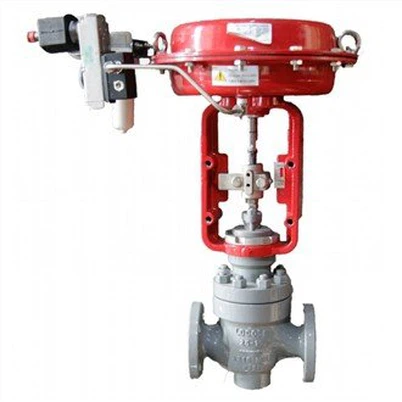
Factors affecting the normal operation of regulating valve and countermeasures
Leave a message
Power station valve, chemical valve, metallurgical valve, high temperature and high pressure valve and other valves in the chemical control system with a high degree of automation, the regulator as the terminal executive device of the automatic regulation system, accept the control signal to achieve the adjustment of the chemical process, the requirements are different, the leakage requirements of the solenoid valve should be implemented in accordance with the relevant provisions. Its operating sensitivity is directly related to the quality of the regulating system. According to the actual statistics of the site, about 70% of the faults come from the regulating valve. Therefore, summarize and analyze the factors affecting the safe operation of the regulating valve and its countermeasures in daily maintenance.
1. Blockage
The problem often occurs in the new operation system and the initial operation of the overhaul, due to the welding slag in the pipeline, rust and so on in the throttle, the guiding part of the blockage so that the medium flow is not smooth, or the regulator in the maintenance of the filler is too tight, resulting in increased friction, resulting in small signal does not act large signal action too much phenomenon.
Troubleshooting: can quickly open, close the auxiliary line or regulating valve, so that the dirt from the auxiliary line or ball valve is rushed by the medium. Another method is to clamp the valve stem with a pipe clamp, and rotate the valve stem vigorously in the case of external signal pressure, so that the valve core flashes over the card. If not, increase the air source pressure and increase the driving power to move up and down repeatedly several times to solve the problem. If you still do not move, you need to disassemble.
2. Leakage
2.1 Valve leakage, valve stem length discomfort. The upward (or downward) distance of the valve stem is not enough, resulting in a gap between the spool and the butterfly valve seat, which cannot be fully contacted, resulting in lax closing and internal leakage. Similarly, the valve stem of the gas-closed valve is too short, resulting in a gap between the spool and the seat, which cannot be fully contacted, resulting in loose closing and internal leakage.
Solution: The regulating valve stem should be shortened (or extended) so that the regulating valve length is appropriate, so that it is no longer internal leakage.